

The best is yet to be,
The last of life, for which the first was made:
Our times are in His hand
Who saith "A whole I planned,
Youth shows but half; trust God: see all, nor be afraid!"
Not that, amassing flowers,
Youth sighed "Which rose make ours,
Which lily leave and then as best recall?"
Not that, admiring stars,
It yearned "Nor Jove, nor Mars;
Mine be some figured flame which blends, transcends them all!"
Not for such hopes and fears
Annulling youth's brief years,
Do I remonstrate: folly wide the mark!
Rather I prize the doubt
Low kinds exist without,
Finished and finite clods, untroubled by a spark.
Poor vaunt of life indeed,
Were man but formed to feed
On joy, to solely seek and find and feast:
Such feasting ended, then
As sure an end to men;
Irks care the crop-full bird? Frets doubt the maw-crammed beast?
Rejoice we are allied
To That which doth provide
And not partake, effect and not receive!
A spark disturbs our clod;
Nearer we hold of God
Who gives, than of His tribes that take, I must believe.
Then, welcome each rebuff
That turns earth's smoothness rough,
Each sting that bids nor sit nor stand but go!
Be our joys three-parts pain!
Strive, and hold cheap the strain;
Learn, nor account the pang; dare, never grudge the throe!
For thence,--a paradox
Which comforts while it mocks,--
Shall life succeed in that it seems to fail:
What I aspired to be,
And was not, comforts me:
A brute I might have been, but would not sink i' the scale.
What is he but a brute
Whose flesh has soul to suit,
Whose spirit works lest arms and legs want play?
To man, propose this test--
Thy body at its best,
How far can that project thy soul on its lone way?
Yet gifts should prove their use:
I own the Past profuse
Of power each side, perfection every turn:
Eyes, ears took in their dole,
Brain treasured up the whole;
Should not the heart beat once "How good to live and learn?"
Not once beat "Praise be Thine!
I see the whole design,
I, who saw power, see now love perfect too:
Perfect I call Thy plan:
Thanks that I was a man!
Maker, remake, complete,--I trust what Thou shalt do!"
For pleasant is this flesh;
Our soul, in its rose-mesh
Pulled ever to the earth, still yearns for rest;
Would we some prize might hold
To match those manifold
Possessions of the brute,--gain most, as we did best!
Let us not always say,
"Spite of this flesh to-day
I strove, made head, gained ground upon the whole!"
As the bird wings and sings,
Let us cry "All good things
Are ours, nor soul helps flesh more, now, than flesh helps soul!"
Therefore I summon age
To grant youth's heritage,
Life's struggle having so far reached its term:
Thence shall I pass, approved
A man, for aye removed
From the developed brute; a god though in the germ.
And I shall thereupon
Take rest, ere I be gone
Once more on my adventure brave and new:
Fearless and unperplexed,
When I wage battle next,
What weapons to select, what armour to indue.
Youth ended, I shall try
My gain or loss thereby;
Leave the fire ashes, what survives is gold:
And I shall weigh the same,
Give life its praise or blame:
Young, all lay in dispute; I shall know, being old.
For note, when evening shuts,
A certain moment cuts
The deed off, calls the glory from the grey:
A whisper from the west
Shoots--"Add this to the rest,
Take it and try its worth: here dies another day."
So, still within this life,
Though lifted o'er its strife,
Let me discern, compare, pronounce at last,
This rage was right i' the main,
That acquiescence vain:
The Future I may face now I have proved the Past."
For more is not reserved
To man, with soul just nerved
To act to-morrow what he learns to-day:
Here, work enough to watch
The Master work, and catch
Hints of the proper craft, tricks of the tool's true play.
As it was better, youth
Should strive, through acts uncouth,
Toward making, than repose on aught found made:
So, better, age, exempt
From strife, should know, than tempt
Further. Thou waitedst age: wait death nor be afraid!
Enough now, if the Right
And Good and Infinite
Be named here, as thou callest thy hand thine own
With knowledge absolute,
Subject to no dispute
From fools that crowded youth, nor let thee feel alone.
Be there, for once and all,
Severed great minds from small,
Announced to each his station in the Past!
Was I, the world arraigned,
Were they, my soul disdained,
Right? Let age speak the truth and give us peace at last!
Now, who shall arbitrate?
Ten men love what I hate,
Shun what I follow, slight what I receive;
Ten, who in ears and eyes
Match me: we all surmise,
They this thing, and I that: whom shall my soul believe?
Not on the vulgar mass
Called "work," must sentence pass,
Things done, that took the eye and had the price;
O'er which, from level stand,
The low world laid its hand,
Found straightway to its mind, could value in a trice:
But all, the world's coarse thumb
And finger failed to plumb,
So passed in making up the main account;
All instincts immature,
All purposes unsure,
That weighed not as his work, yet swelled the man's amount:
Thoughts hardly to be packed
Into a narrow act,
Fancies that broke through language and escaped;
All I could never be,
All, men ignored in me,
This, I was worth to God, whose wheel the pitcher shaped.
Ay, note that Potter's wheel,
That metaphor! and feel
Why time spins fast, why passive lies our clay,--
Thou, to whom fools propound,
When the wine makes its round,
"Since life fleets, all is change; the Past gone, seize to-day!"
Fool! All that is, at all,
Lasts ever, past recall;
Earth changes, but thy soul and God stand sure:
What entered into thee,
That was, is, and shall be:
Time's wheel runs back or stops: Potter and clay endure.
He fixed thee mid this dance
Of plastic circumstance,
This Present, thou, forsooth, wouldst fain arrest:
Machinery just meant
To give thy soul its bent,
Try thee and turn thee forth, sufficiently impressed.
What though the earlier grooves,
Which ran the laughing loves
Around thy base, no longer pause and press?
What though, about thy rim,
Skull-things in order grim
Grow out, in graver mood, obey the sterner stress?
Look not thou down but up!
To uses of a cup,
The festal board, lamp's flash and trumpet's peal,
The new wine's foaming flow,
The Master's lips a-glow!
Thou, heaven's consummate cup, what need'st thou with earth's wheel?
But I need, now as then,
Thee, God, who mouldest men;
And since, not even while the whirl was worst,
Did I,--to the wheel of life
With shapes and colours rife,
Bound dizzily,--mistake my end, to slake Thy thirst:
So, take and use Thy work:
Amend what flaws may lurk,
What strain o' the stuff, what warpings past the aim!
My times be in Thy hand!
Perfect the cup as planned!
Let age approve of youth, and death complete the same!
Poem Analysis – “Rabbi Ben Ezra” (Robert Browning)
Overview
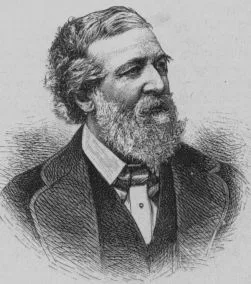
“Rabbi Ben Ezra” is a long philosophical poem by the Victorian poet Robert Browning (1812–1889), first published in his collection Dramatis Personae (1864). It is spoken in the voice of Abraham ibn Ezra, a twelfth-century Jewish scholar, poet and biblical commentator from Spain. The poem opens with one of the most quoted lines in English poetry: “Grow old along with me! / The best is yet to be.” Over thirty-two stanzas, the old rabbi argues that old age is not a decline but the fulfilment of a life planned by God, that doubt and struggle are signs of the soul’s dignity, and that a person’s true worth lies not in visible achievements but in everything he aspired to be. The poem ends with the famous image of God as a potter shaping human beings like cups on a wheel.
Themes
- Old age as fulfilment: “The last of life, for which the first was made”; youth shows only half of God’s plan, and age completes it.
- The value of struggle: “Then, welcome each rebuff / That turns earth’s smoothness rough”; pain, doubt and effort lift human beings above animals who are content simply to feed.
- Aspiration over achievement: “What I aspired to be, / And was not, comforts me”; the world judges by finished “work,” but God values the thoughts, instincts and purposes that never became visible deeds.
- The soul and the body: The body serves the soul; the test of a life is how far it carries the soul forward.
- Permanence: “All that is, at all, / Lasts ever, past recall”; against the drinking-song wisdom of “seize to-day,” the rabbi insists that what has entered the soul endures.
- Trust in God: The final prayer, “My times be in Thy hand! / Perfect the cup as planned!”, accepts death as the completion of God’s design.
Mood and Atmosphere
The poem is confident, serene and argumentative at once. The old speaker is not nostalgic or fearful; he looks back on his youth with understanding and forward to death with trust. The tone moves from gentle invitation (“Grow old along with me!”) through vigorous debate (“Fool! All that is, at all, / Lasts ever”) to a quiet, devout prayer.
Imagery and Symbols
- Flowers and stars: The restless choices and longings of youth.
- The spark and the clod: The divine spark that disturbs the earthly lump of human nature and keeps it from being a mere animal.
- The crop-full bird and maw-crammed beast: Creatures untroubled by care because they want nothing beyond food.
- The world’s coarse thumb and finger: The crude standards by which society measures a person’s worth.
- The Potter’s wheel and the cup: Taken from the Bible (Jeremiah 18, Isaiah 64) and from the Persian Rubaiyat tradition, this image presents life’s changing circumstances as the turning of a wheel on which God shapes the soul, first with “laughing loves” and later with “skull-things,” until the cup is ready for heaven’s banquet.
Language, Form and Sound
The poem is written in thirty-two six-line stanzas with a regular rhyme scheme (aabccb). Lines one, two, four and five are short (trimeter), while lines three and six are long (pentameter and hexameter), so each stanza moves in two quick steps followed by a long, weighty line that carries its main thought. Browning’s style is compressed and argumentative, full of exclamations, rhetorical questions, inversions and dashes; it often reads like a sermon or a dialogue with an imagined listener. The opening invitation and the closing prayer frame the poem with the phrase “in His hand” / “in Thy hand,” echoing Psalm 31.
Context
Browning was a master of the dramatic monologue, a poem spoken by a historical or imagined character. In “Rabbi Ben Ezra” he uses the voice of a medieval Jewish sage to answer the pessimism of his own Victorian age, especially the carpe diem philosophy popularised by Edward FitzGerald’s translation of the Rubaiyat of Omar Khayyam (1859), where the potter and the wine-cup are images of meaningless fate. Browning turns the same images into symbols of purpose and divine care.
Speaker’s Attitude
The rabbi speaks as a wise elder who has made peace with life. He is grateful, reflective and firm in his faith, but not complacent: he values doubt, struggle and unfulfilled aspiration as much as success.
Conclusion
“Rabbi Ben Ezra” is Browning’s great defence of old age, struggle and aspiration, a dramatic monologue that begins with “Grow old along with me! / The best is yet to be” and ends with the image of God as a potter perfecting the human soul like a cup on His wheel.
More poems by Robert Browning
Poem knowledge graph
A literary network built from the poet who wrote this poem and the words poems have in common.
Click a node to explore it; use the mouse wheel to zoom.