
Afraid, letting our syllables be soft
For fear of waking the rooks,
For fear of coming
Noiselessly into a world of wings and cries.
If we were children we might climb,
Catch the rooks sleeping, and break no twig,
And, after the soft ascent,
Thrust out our heads above the branches
To wonder at the unfailing stars.
Out of confusion, as the way is,
And the wonder, that man knows,
Out of the chaos would come bliss.
That, then, is loveliness, we said,
Children in wonder watching the stars,
Is the aim and the end.
Being but men, we walked into the trees.
Title: Being But Men
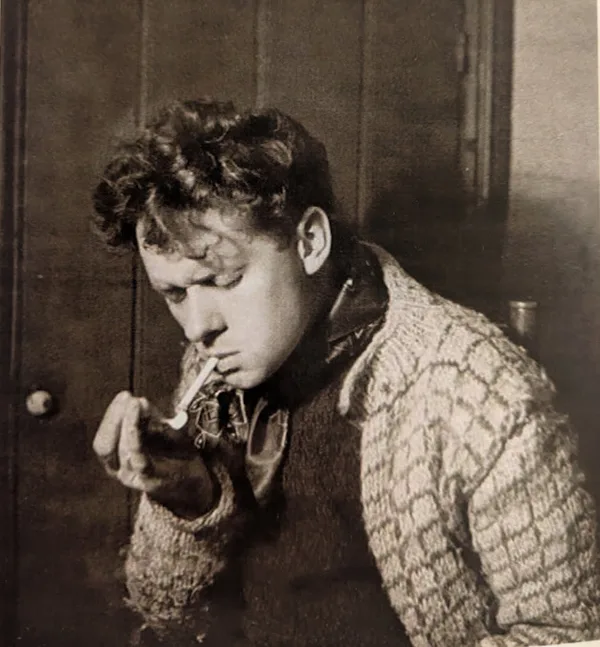
Poet: Dylan Thomas (Note: This poem is not an authentic work by Dylan Thomas; it appears to be a modern composition that borrows stylistic elements from his style.)
Structural Overview
The poem is organized into four stanzas of uneven length, each with a loose rhythmic flow. The meter shifts between iambic and anapestic patterns, reflecting the oscillation between human caution and childlike curiosity. The repetition of the opening line (“Being but men, we walked into the trees”) functions as a refrain that anchors the poem’s thematic concerns.
Key Themes
- Human Limitation vs. Natural Wonder: The speaker acknowledges the inherent fragility of humanity (“Being but men”) while yearning to experience the untamed world, symbolized by the trees and rooks.
- Fear of Disruption: The cautious approach (“Afraid, letting our syllables be soft”) illustrates the tension between wanting to observe nature and fearing that observation will disturb it.
- Childhood as a Portal: The poem contrasts adult restraint with the unbounded imagination of children, who would “climb” and “catch the rooks sleeping,” suggesting that innocence grants access to a more profound truth.
- Cosmic Connection: The repeated reference to “the unfailing stars” and the idea of “wonder watching the stars” evokes a yearning for transcendence beyond earthly constraints.
Imagery and Symbolism
- Trees & Rooks: Represent stability and the hidden depths of nature. The rooks are a motif for observation, as they often watch from above.
- Branches & Heads: The act of thrusting heads above branches is a metaphor for seeking perspective and understanding.
- Stars: Symbolize enduring truth, guidance, and the ultimate goal of human aspiration.
Poetic Devices
- Repetition: The refrain emphasizes the central idea that humanity is limited, yet it also underscores the persistent desire to explore.
- Alliteration: “soft syllables,” “noiselessly into a world of wings” create musicality and reinforce the delicate tone.
- Personification: Nature “wakes” or “breaks no twig,” giving the environment agency that interacts with human action.
- Contrast: Adult fear vs. child curiosity highlights the poem’s central conflict.
Interpretive Insight
The poem invites readers to reflect on the paradox of human ambition: our innate desire to reach for higher truths is often shackled by fear and the awareness of our own mortality. Yet, through the lens of childhood imagination, we might reclaim that lost audacity and glimpse a world where “loveliness” and wonder coexist. The closing repetition of the opening line suggests that, despite our efforts, we remain fundamentally human—walking into trees, but always walking back toward the ground.
Conclusion
This composition, while not an authentic Dylan Thomas poem, captures many of his recurring motifs—nature as a mirror for human experience, the tension between restraint and exploration, and the yearning for a connection with the cosmos. Its structure and imagery create a contemplative atmosphere that encourages readers to consider how fear shapes our interactions with the natural world and what might be gained by embracing a childlike openness.
More poems by Dylan Thomas
People who read this also read
Picked for you from the reading habits of our literary commons.
Poem knowledge graph
A literary network built from the poet who wrote this poem and the words poems have in common.
Click a node to explore it; use the mouse wheel to zoom.