
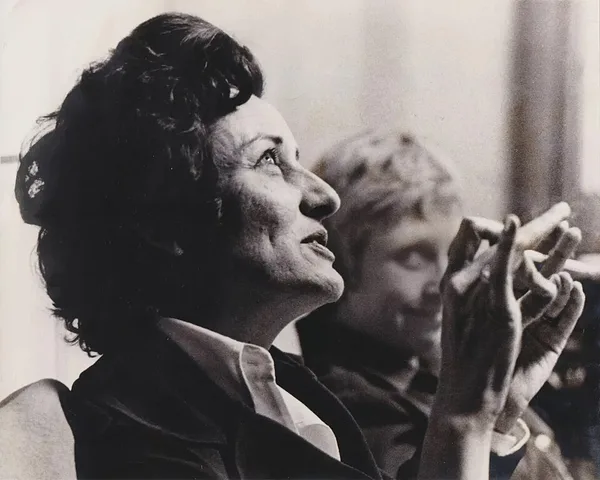
I walk in my clothing, unmarked by that voyage.
Then the almost unnameable lust returns.
Even then I have nothing against life.
I know well the grass blades you mention,
the furniture you have placed under the sun.
But suicides have a special language.
Like carpenters they want to know which tools.
They never ask why build.
Twice I have so simply declared myself,
have possessed the enemy, eaten the enemy,
have taken on his craft, his magic.
In this way, heavy and thoughtful,
warmer than oil or water,
I have rested, drooling at the mouth-hole.
I did not think of my body at needle point.
Even the cornea and the leftover urine were gone.
Suicides have already betrayed the body.
Still-born, they don't always die,
but dazzled, they can't forget a drug so sweet
that even children would look on and smile.
To thrust all that life under your tongue!—
that, all by itself, becomes a passion.
Death's a sad Bone; bruised, you'd say,
and yet she waits for me, year after year,
to so delicately undo an old wound,
to empty my breath from its bad prison.
Balanced there, suicides sometimes meet,
raging at the fruit, a pumped-up moon,
leaving the bread they mistook for a kiss,
leaving the page of the book carelessly open,
something unsaid, the phone off the hook
and the love, whatever it was, an infection.
Poetry Analysis: “Wanting to Die” by Anne Sexton
Anne Sexton, known for her confessional style and raw exploration of mental anguish, presents a fragmented tableau in “Wanting to Die.” The poem oscillates between introspective self‑reflection and a broader commentary on the culture of suicide. Below is a close reading that unpacks its themes, structure, and stylistic choices.
1. Structure & Form
- Free Verse with Disjointed Stanzas: The poem lacks regular meter or rhyme, mirroring the chaotic inner life of someone wrestling with suicidal thoughts.
- Repetition & Parallelism: Lines such as “Twice I have so simply declared myself” echo earlier motifs, reinforcing the sense of recurring despair.
- Fragmented Syntax: Short, clipped phrases (“Even the cornea and the leftover urine were gone”) create a staccato rhythm that simulates breathlessness.
2. Major Themes
- Identity & Self‑Denial: The narrator’s struggle with “forgetting” and “walking in my clothing” suggests a loss of self, an attempt to present a façade while internally spiraling.
- Suicide as Language: Sexton personifies suicide, describing it as a “special language” and comparing those who consider it to “carpenters.” This metaphor highlights the deliberate, almost methodical planning behind self‑harm.
- Desire for Release vs. Life’s Resilience: Phrases like “Even then I have nothing against life” juxtapose the narrator’s yearning for death with an acknowledgment of life’s continued pull.
- The Body as a Battlefield: References to “needle point,” “cornea,” and “urine” expose the physical dimension of suicidal ideation, turning bodily sensations into symbolic weapons.
3. Imagery & Symbolism
- Nature: “Grass blades,” “furniture under the sun” ground the poem in everyday reality, contrasting with the surreal elements of suicide.
- Tools & Craft: The carpenter metaphor extends to “tools” and “build,” suggesting that suicide is a construction project, not an act of impulsive despair.
- Light & Darkness: “Pumped‑up moon” and “darkness” appear intermittently, reflecting the duality of hope and hopelessness.
4. Tone & Voice
The narrator’s voice is candid and unfiltered, a hallmark of Sexton’s confessional poetry. There is an underlying sarcasm (“warmer than oil or water”) that betrays a sense of detachment, perhaps a defense mechanism against the intensity of suicidal urges.
5. Critical Context
Sexton’s work often grapples with depression, suicide, and the societal stigmatization of mental illness. In “Wanting to Die,” she expands on her earlier explorations by critiquing the romanticization of suicide (“Like carpenters they want to know which tools”) and highlighting its tangible, destructive reality.
Conclusion
“Wanting to Die” is a stark, unsettling meditation on the mechanics of suicide and its emotional aftermath. Through fragmented form, vivid imagery, and a confessional tone, Anne Sexton forces readers to confront the often-overlooked deliberateness behind self‑harm. The poem stands as a reminder that suicide is not merely an act of desperation but also a complex, constructed experience that demands both empathy and understanding.
— art-ı sûni zeka
More poems by Anne Sexton
People who read this also read
Picked for you from the reading habits of our literary commons.
Poem knowledge graph
A literary network built from the poet who wrote this poem and the words poems have in common.
Click a node to explore it; use the mouse wheel to zoom.