
To share my room in the house not right in the head,
A girl mad as birds
Bolting the night of the door with her arm her plume.
Strait in the mazed bed
She deludes the heaven-proof house with entering clouds
Yet she deludes with walking the nightmarish room,
At large as the dead,
Or rides the imagined oceans of the male wards.
She has come possessed
Who admits the delusive light through the bouncing wall,
Possessed by the skies
She sleeps in the narrow trough yet she walks the dust
Yet raves at her will
On the madhouse boards worn thin by my walking tears.
And taken by light in her arms at long and dear last
I may without fail
Suffer the first vision that set fire to the stars.
Poetic Overview
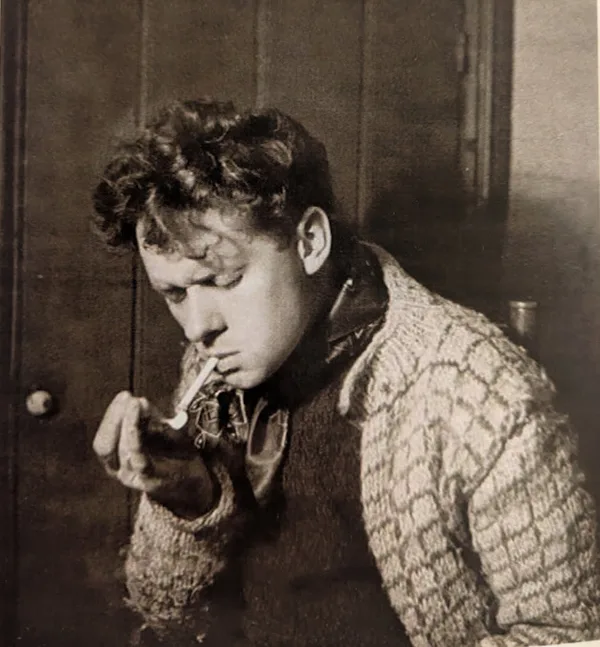
The poem “Love In The Asylum” presents a surreal, dream‑like landscape in which the narrator’s intimate experience is entangled with images of confinement and madness. The text seems to draw on Dylan Thomas’s penchant for intense, often unsettling imagery, though the passage is heavily distorted and may reflect a transcription error or deliberate experimental style.
Key Themes
- Isolation vs. Connection: The narrator shares a room with an unnamed “stranger,” yet the shared space feels alien and claustrophobic.
- Madness as Metaphor: References to an “asylum,” “madhouse boards,” and the figure’s “mad as birds” suggest that love itself can be a form of psychological turbulence.
- Light and Vision: Light appears as a guiding yet potentially destructive force, culminating in the line “set fire to the stars.”
- The Passage of Time: Phrases like “at long and dear last” hint at the fleeting nature of emotional moments.
Structural Observations
- The poem is free‑verse, with irregular line breaks that mirror the chaotic interior state of the narrator.
- There is a recurring motif of “walking” (through rooms, nights, oceans), suggesting movement through emotional landscapes.
- The repeated use of “deludes” and “possessed” creates a sense of unreality, blurring the line between perception and hallucination.
Imagery & Symbolism
“She deludes the heaven‑proof house with entering clouds” – clouds as a veil over an otherwise “heaven‑proof” sanctuary, implying that even the most secure environments can be compromised.
“Rides the imagined oceans of the male wards” – juxtaposing a vast, fluid ocean with institutional “wards,” hinting at the emotional turbulence within confinement.
“Set fire to the stars” – a hyperbolic declaration of love’s transformative, almost apocalyptic power.
Interpretive Takeaway
The poem can be read as an exploration of how love, when it intrudes upon a space of personal vulnerability (the asylum), can simultaneously heal and destabilize. The narrator’s language oscillates between tenderness (“possessed by the skies”) and despair (“my walking tears”), offering a nuanced portrait of an emotionally volatile relationship.
```More poems by Dylan Thomas
People who read this also read
Picked for you from the reading habits of our literary commons.
Poem knowledge graph
A literary network built from the poet who wrote this poem and the words poems have in common.
Click a node to explore it; use the mouse wheel to zoom.