
The books are filled with names of kings.
Was it the kings who hauled the craggy blocks of stone?
And Babylon, so many times destroyed.
Who built the city up each time? In which of Lima's houses,
That city glittering with gold, lived those who built it?
In the evening when the Chinese wall was finished
Where did the masons go? Imperial Rome
Is full of arcs of triumph. Who reared them up? Over whom
Did the Caesars triumph? Byzantium lives in song.
Were all her dwellings palaces? And even in Atlantis of the legend
The night the seas rushed in,
The drowning men still bellowed for their slaves.
Young Alexander conquered India.
He alone?
Caesar beat the Gauls.
Was there not even a cook in his army?
Phillip of Spain wept as his fleet
was sunk and destroyed. Were there no other tears?
Frederick the Great triumphed in the Seven Years War.
Who triumphed with him?
Each page a victory
At whose expense the victory ball?
Every ten years a great man,
Who paid the piper?
So many particulars.
So many questions.
Poem Title: A Worker Reads History
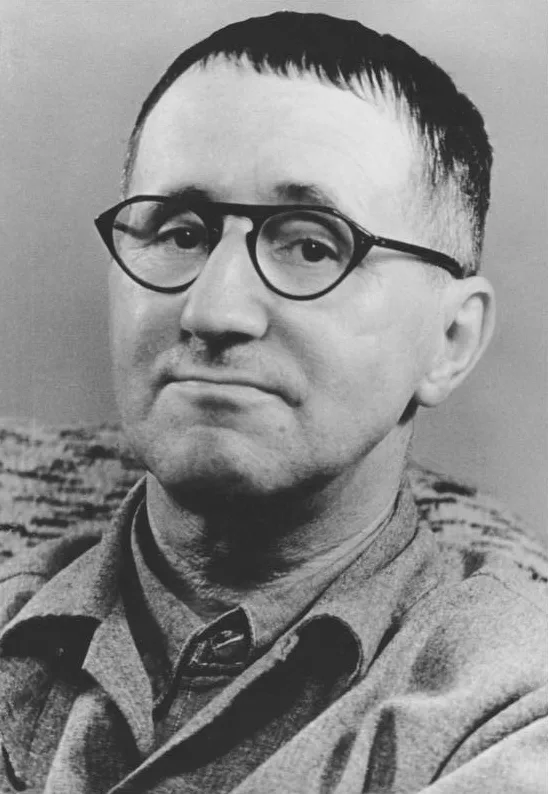
Poet: Bertolt Brecht
Poetic Analysis
Brecht’s fragmentary verse interrogates the very nature of historical memory. The poem is structured as a series of rhetorical questions, each addressing the builders or conquerors behind monumental achievements. This technique foregrounds the anonymity of labor and the mythologizing tendency of history.
Key Themes
- Attribution of Achievement: The repeated question “Who built …?” highlights the gap between celebrated leaders and the unnamed workers who actually construct empires.
- Historical Cycles: References to Thebes, Babylon, Rome, Byzantium, and Atlantis suggest the rise and fall of civilizations. Brecht implies that each destruction is followed by reconstruction, a cyclical pattern that repeats across time.
- Power vs. Labor: By juxtaposing kings, Caesars, and Alexander with “the masons” or “the cooks,” the poem contrasts symbolic power with physical labor, questioning whose stories are preserved in history.
- Collective Memory: The final lines, “So many particulars. So many questions,” underscore the fragmentary nature of historical knowledge and invite readers to fill in the blanks.
Form & Style
The poem employs a free verse form, broken into short, abrupt lines that mimic the fragmented nature of historical records. Brecht’s use of enjambment and abrupt shifts creates a sense of immediacy, urging the reader to confront each question directly.
Interpretive Notes
- The line “Was there not even a cook in his army?” serves as Brecht’s signature critique of romanticized war narratives, reminding us that even the most heroic campaigns rely on ordinary support roles.
- References to “Atlantis” and “the night the seas rushed in” may symbolize lost knowledge, suggesting that history is not only built but also erased.
- The closing image of a “victory ball” and the question “Who paid the piper?” invoke the idea that triumphs are celebrated while the costs—human, material, and moral—remain unacknowledged.
Overall, Brecht’s poem functions as a call to recognize the unseen labor behind historical achievements and to question whose stories are privileged in collective memory.
```More poems by Bertolt Brecht
People who read this also read
Picked for you from the reading habits of our literary commons.
Poem knowledge graph
A literary network built from the poet who wrote this poem and the words poems have in common.
Click a node to explore it; use the mouse wheel to zoom.