
It is considered low to talk about food.
The fact is: they have
Already eaten.
The lowly must leave this earth
Without having tasted
Any good meat.
For wondering where they come from and
Where they are going
The fine evenings find them
Too exhausted.
They have not yet seen
The mountains and the great sea
When their time is already up.
If the lowly do not
Think about what's low
They will never rise.
THE BREAD OF THE HUNGRY HAS
ALL BEEN EATEN
Meat has become unknown. Useless
The pouring out of the people's sweat.
The laurel groves have been
Lopped down.
From the chimneys of the arms factories
Rises smoke.
THE HOUSE-PAINTER SPEAKS OF
GREAT TIMES TO COME
The forests still grow.
The fields still bear
The cities still stand.
The people still breathe.
ON THE CALENDAR THE DAY IS NOT
YET SHOWN
Every month, every day
Lies open still. One of those days
Is going to be marked with a cross.
THE WORKERS CRY OUT FOR BREAD
The merchants cry out for markets.
The unemployed were hungry. The employed
Are hungry now.
The hands that lay folded are busy again.
They are making shells.
THOSE WHO TAKE THE MEAT FROM THE TABLE
Teach contentment.
Those for whom the contribution is destined
Demand sacrifice.
Those who eat their fill speak to the hungry
Of wonderful times to come.
Those who lead the country into the abyss
Call ruling too difficult
For ordinary men.
WHEN THE LEADERS SPEAK OF PEACE
The common folk know
That war is coming.
When the leaders curse war
The mobilization order is already written out.
THOSE AT THE TOP SAY: PEACE
AND WAR
Are of different substance.
But their peace and their war
Are like wind and storm.
War grows from their peace
Like son from his mother
He bears
Her frightful features.
Their war kills
Whatever their peace
Has left over.
ON THE WALL WAS CHALKED:
They want war.
The man who wrote it
Has already fallen.
THOSE AT THE TOP SAY:
This way to glory.
Those down below say:
This way to the grave.
THE WAR WHICH IS COMING
Is not the first one. There were
Other wars before it.
When the last one came to an end
There were conquerors and conquered.
Among the conquered the common people
Starved. Among the conquerors
The common people starved too.
THOSE AT THE TOP SAY COMRADESHIP
Reigns in the army.
The truth of this is seen
In the cookhouse.
In their hearts should be
The selfsame courage. But
On their plates
Are two kinds of rations.
WHEN IT COMES TO MARCHING MANY DO NOT
KNOW
That their enemy is marching at their head.
The voice which gives them their orders
Is their enemy's voice and
The man who speaks of the enemy
Is the enemy himself.
IT IS NIGHT
The married couples
Lie in their beds. The young women
Will bear orphans.
GENERAL, YOUR TANK IS A POWERFUL VEHICLE
It smashes down forests and crushes a hundred men.
But it has one defect:
It needs a driver.
General, your bomber is powerful.
It flies faster than a storm and carries more than an elephant.
But it has one defect:
It needs a mechanic.
General, man is very useful.
He can fly and he can kill.
But he has one defect:
He can think.
**Title:** From A German War Primer
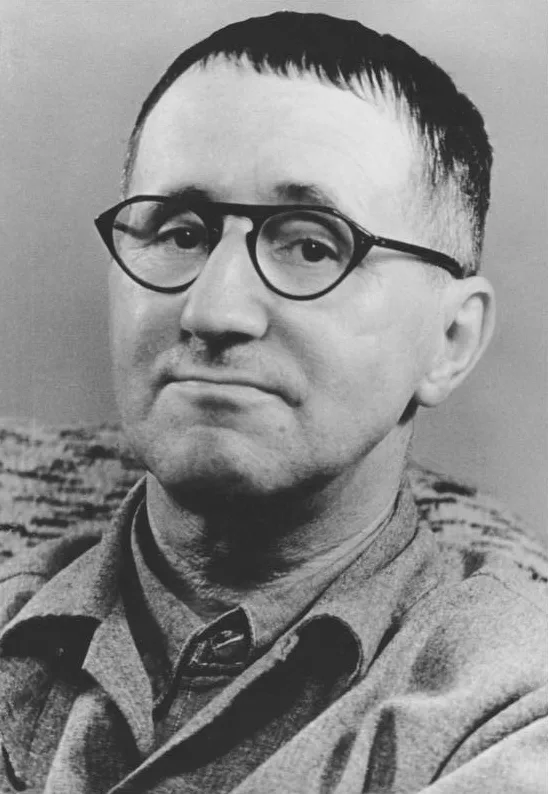
**Poet:** Bertolt Brecht
Structural Overview
Brecht’s poem is organized into a series of stanzas that oscillate between stark reportage and ironic commentary. The form is almost aphoristic: each stanza presents a single, often paradoxical idea that serves as both image and critique. The lack of traditional meter or rhyme underscores the poem’s utilitarian, almost “primer” tone—Brecht is not creating lyrical beauty but a manual for understanding the mechanics of war and propaganda.
Key Themes
- Dehumanization and Commodification of Life: The repeated reference to “bread” as a commodity, the division between those who eat and those who feed, highlights how war turns human beings into units of production.
- Propaganda vs. Reality: Lines such as “When the leaders speak of peace, the common folk know that war is coming” expose the dissonance between political rhetoric and lived experience.
- Class Division: The poem contrasts the “lowly” with those at the top, illustrating how economic and social hierarchies are exploited in wartime economies.
- Irony of “Peace” and “War”:** The repeated pairing of peace with war, described as “wind and storm,” signals the cyclical nature of conflict.
Imagery and Symbolism
- Bread & Meat: Represent sustenance and power. When “the bread of the hungry has all been eaten,” scarcity becomes a weapon.
- Chimneys & Smoke: Symbolize industrial war production, turning factories into engines of destruction.
- Chalk on the wall: “They want war” becomes a literal inscription, suggesting how propaganda is literally etched into public consciousness.
- General’s Machines: The tanks, bombers, and the human operator illustrate the paradox of technology: powerful yet dependent on human agency.
Political Context and Brecht’s Intent
Brecht wrote this piece during the rise of fascism in Europe, a period when state rhetoric masked militaristic ambitions. The poem serves as both a critique of political elites and an early warning to the masses: war is not a distant, abstract concept but a present reality that consumes resources and lives. Brecht’s use of “primer” suggests an educational purpose—equipping readers with the vocabulary to recognize and resist propaganda.
Conclusion
“From A German War Primer” is a dense, politically charged text that blends poetic diction with didactic clarity. Its fragmented structure and recurring motifs create a sense of urgency, urging readers to see beyond the rhetoric that masks war’s true cost. Brecht’s work remains a potent reminder of how language can both reveal and conceal the mechanisms that sustain conflict.
More poems by Bertolt Brecht
Poem knowledge graph
A literary network built from the poet who wrote this poem and the words poems have in common.
Click a node to explore it; use the mouse wheel to zoom.