
My spirit not awakening, till the beam
Of an Eternity should bring the morrow.
Yes! tho' that long dream were of hopeless sorrow,
'Twere better than the cold reality
Of waking life, to him whose heart must be,
And hath been still, upon the lovely earth,
A chaos of deep passion, from his birth.
But should it be- that dream eternally
Continuing- as dreams have been to me
In my young boyhood- should it thus be given,
'Twere folly still to hope for higher Heaven.
For I have revell'd, when the sun was bright
I' the summer sky, in dreams of living light
And loveliness,- have left my very heart
In climes of my imagining, apart
From mine own home, with beings that have been
Of mine own thought- what more could I have seen?
'Twas once- and only once- and the wild hour
From my remembrance shall not pass- some power
Or spell had bound me- 'twas the chilly wind
Came o'er me in the night, and left behind
Its image on my spirit- or the moon
Shone on my slumbers in her lofty noon
Too coldly- or the stars- howe'er it was
That dream was as that night-wind- let it pass.
I have been happy, tho' in a dream.
I have been happy- and I love the theme:
Dreams! in their vivid coloring of life,
As in that fleeting, shadowy, misty strife
Of semblance with reality, which brings
To the delirious eye, more lovely things
Of Paradise and Love- and all our own!
Than young Hope in his sunniest hour hath known.
Poet and Context
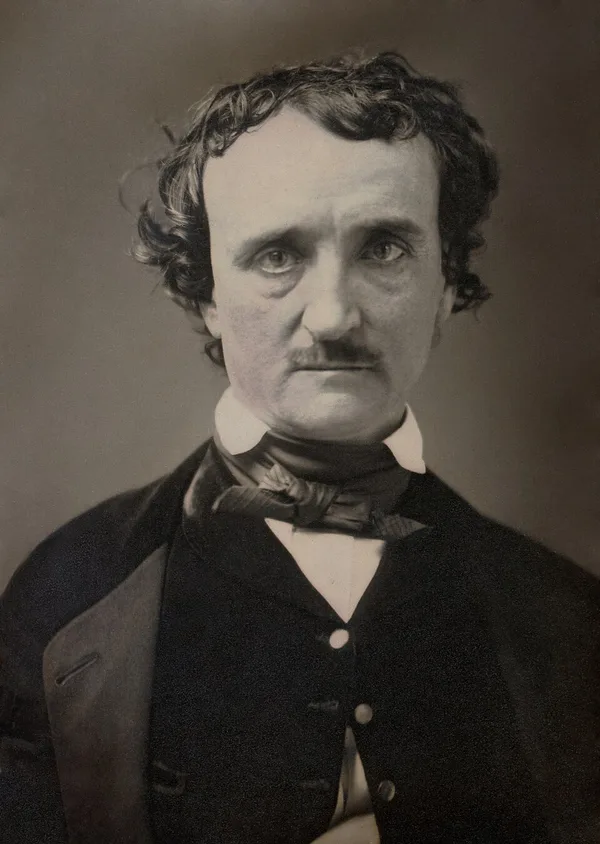
The poem is credited to Edgar Allan Poe, a master of macabre and melancholic verse. Although the text is not among his canonical works, its themes—dreams as a refuge from reality and an exploration of the subconscious—are consistent with Poe’s preoccupation with the boundary between life and death, sanity and madness.
Form and Structure
The poem is written in free verse, lacking a strict meter or rhyme scheme. This fluidity mirrors the unpredictable nature of dreams. The repeated use of enjambment creates a continuous flow, as if the narrator’s thoughts spill from one line into the next without pause.
Key Themes
- Dream as Escape: The opening line, “Oh! that my young life were a lasting dream!” frames the poem as an elegiac longing for a state where pain is suspended.
- Duality of Reality and Illusion: The narrator oscillates between the “cold reality” of waking life and the warmth of dream imagery, suggesting that dreams can be both more painful (hopeless sorrow) and more comforting.
- Transience of Memory: Phrases like “From my remembrance shall not pass” and the emphasis on fleeting moments underscore how dreams are preserved only in memory.
- Quest for Transcendence: The recurring reference to “Eternity” and “Heaven” points to a yearning for an eternal, undying experience beyond mortal constraints.
Imagery and Symbolism
The poem is rich in natural imagery—“beam of an Eternity,” “chilly wind,” “moon,” and “stars.” These celestial symbols serve dual purposes: they are literal elements of a dreamscape and metaphors for hope, guidance, or the indifferent forces that shape human experience. The line “Too coldly— or the stars—howe’er it was” juxtaposes warmth and chill, echoing the ambivalence of dream versus reality.
Language and Tone
The diction is archaic yet accessible (“tho’,” “revell’d”), reflecting Poe’s characteristic use of period English. The tone oscillates between wistful yearning and resigned acceptance, culminating in the final stanza where the narrator acknowledges that even within a dream “I have been happy.” This bittersweet conclusion suggests that happiness is not solely an external state but can be cultivated internally.
Conclusion
This poem, though not a recognized piece of Poe’s oeuvre, encapsulates the quintessential Poean tension between illusion and truth. Its free verse structure mirrors the fluidity of dreams, while its thematic depth invites readers to contemplate how our inner worlds shape and sometimes outshine the external reality.
More poems by Edgar Allan Poe
People who read this also read
Picked for you from the reading habits of our literary commons.
Poem knowledge graph
A literary network built from the poet who wrote this poem and the words poems have in common.
Click a node to explore it; use the mouse wheel to zoom.