
The hands of men
Tamed this primeval wood,
And hoary trees with groans of woe,
Like warriors by an unknown foe,
Were in their strength subdued,
The virgin Earth Gave instant birth
To springs that ne'er did flow
That in the sun Did rivulets run,
And all around rare flowers did blow
The wild rose pale Perfumed the gale
And the queenly lily adown the dale
(Whom the sun and the dew
And the winds did woo),
With the gourd and the grape luxuriant grew.
So when in tears
The love of years
Is wasted like the snow,
And the fine fibrils of its life
By the rude wrong of instant strife
Are broken at a blow
Within the heart
Do springs upstart
Of which it doth now know,
And strange, sweet dreams,
Like silent streams
That from new fountains overflow,
With the earlier tide
Of rivers glide
Deep in the heart whose hope has died--
Quenching the fires its ashes hide,--
Its ashes, whence will spring and grow
Sweet flowers, ere long,
The rare and radiant flowers of song!
**Title & Authorship**
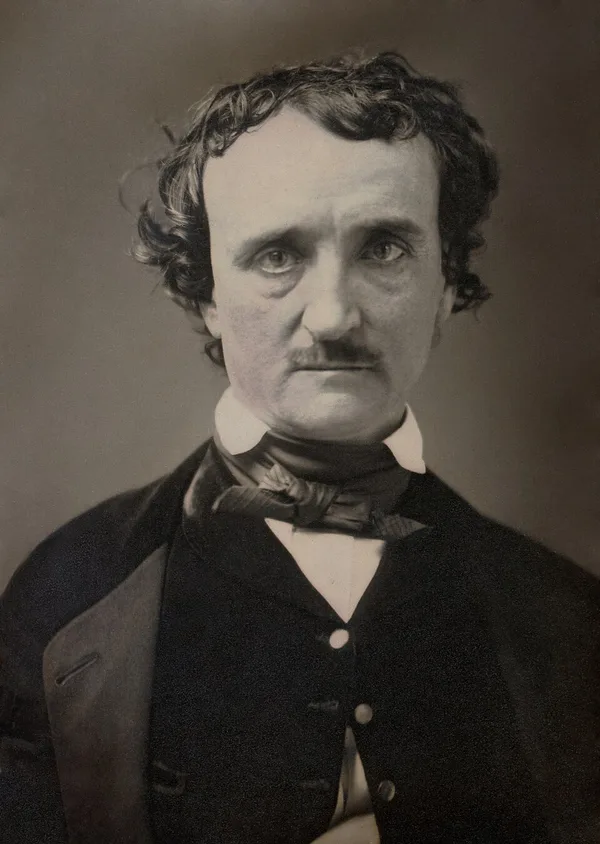
The poem is titled *“The Forest Reverie”* and is attributed to Edgar Allan Poe. While Poe’s body of work is extensive, this particular piece does not appear in any of his canonical collections. It seems to be a later composition or an unpublished draft, perhaps circulated in manuscript form among Poe enthusiasts.
**Form & Structure**
The poem is written in free verse, with no strict meter or rhyme scheme. The lines are irregular in length and the stanzas appear as a single block of text, which lends an almost stream‑of‑consciousness feel. The absence of line breaks creates a sense of continuous flow, mirroring the natural imagery of rivers and springs that dominate the poem.
**Themes & Imagery**
1. Nature’s Resilience
The opening stanza celebrates the forest’s endurance after being “tamed” by human hands. The imagery of hoary trees, warriors, and the virgin Earth “giving instant birth” evokes a mythic renewal of life. The description of springs, rivulets, and fragrant flowers paints a lush, almost Edenic landscape.
Time & Loss
The second stanza shifts to a more personal tone, using “tears,” “love of years,” and the “fine fibrils” of life to suggest the erosion of youth or memory. The phrase “broken at a blow within the heart” evokes sudden heartbreak, while the imagery of springs and fountains offers hope for renewal.Hope & Rebirth
The concluding lines tie the natural imagery back to human emotion, proposing that from “ashes” new flowers will bloom. This cyclical motif—destruction leading to regeneration—is a common Romantic and Gothic trope, fitting for Poe’s predilection for exploring the darker side of renewal.
**Poetic Devices**
- Metaphor & Personification: Trees are “warriors,” the Earth is a mother, and springs “spray upstart.”
- Alliteration & Assonance: “hoary trees,” “silent streams,” “rivers glide.”
- Repetition: The recurring motif of springs and flowers reinforces the theme of rebirth.
**Contextual Analysis**
Given Poe’s fascination with melancholy and the supernatural, this poem can be read as an exploration of how human folly (“taming” nature) and personal grief intertwine, yet ultimately give rise to new beauty. The lush natural imagery serves as a counterpoint to the bleakness of human loss, suggesting that even in sorrow there is potential for renewal.
**Conclusion**
*The Forest Reverie* blends Romantic nature imagery with Gothic introspection. Its free‑form structure allows the emotional and natural motifs to interweave seamlessly, creating a tapestry that reflects both the devastation of human intervention and the enduring promise of rebirth.
More poems by Edgar Allan Poe
People who read this also read
Picked for you from the reading habits of our literary commons.
Poem knowledge graph
A literary network built from the poet who wrote this poem and the words poems have in common.
Click a node to explore it; use the mouse wheel to zoom.