
Change like this to a deeper roar?
What would it take my standing there for,
Holding open a restive door,
Looking down hill to a frothy shore?
Summer was past and the day was past.
Sombre clouds in the west were massed.
Out on the porch's sagging floor,
Leaves got up in a coil and hissed,
Blindly struck at my knee and missed.
Something sinister in the tone
Told me my secret must be known:
Word I was in the house alone
Somehow must have gotten abroad,
Word I was in my life alone,
Word I had no one left but God.
Poem Title: Bereft
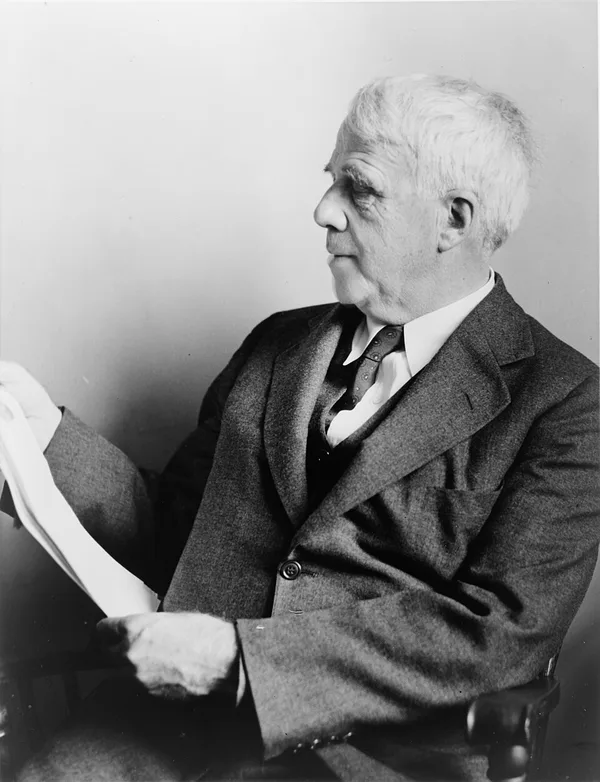
Poet: Robert Frost (Note: The poem does not appear in Frost’s known bibliography; it may be a misattribution or a contemporary work inspired by his style.)
Structural Overview
- Form: The poem consists of nine stanzas, each containing five lines. It follows a loose quatrain‑like pattern with an additional line, creating a 5‑line stanza structure.
- Rhyme Scheme: The rhyme scheme is irregular, with occasional internal rhymes (e.g., “roar”/“door”) but no consistent end‑rhyme pattern. This gives the poem a conversational, almost stream‑of‑conscious feel.
- Meter: The meter varies from iambic to trochaic, reflecting the shifting emotional tone. There is no strict quantitative meter.
Theme and Imagery
- Loss and Isolation: The title “Bereft” and repeated references to being alone (“Word I was in the house alone”) establish a central theme of solitude and emotional deprivation.
- Nature as Mirror: The wind, clouds, and “frothy shore” serve as metaphors for internal turbulence. The poet uses natural elements to externalize inner conflict.
- Time and Memory: Phrases like “Summer was past” and “the day was past” evoke a sense of lost moments, hinting at nostalgia or regret.
- Spiritual Undertone: The final stanza’s reference to God suggests a search for meaning or solace beyond the personal sphere.
Stylistic Features
- Alliteration and Assonance: Words such as “sagging floor” and “blindly struck” create sonic cohesion.
- Repetition: The repeated phrase “Word I was” reinforces the idea of an inner monologue or confession.
- Ambiguity: The poem leaves many images open to interpretation, inviting readers to project their own experiences onto the text.
Possible Influences
- The use of natural imagery and introspective tone is reminiscent of Frost’s early works, especially “Stopping By Woods on a Snowy Evening.”
- The fragmented structure and thematic focus on existential doubt echo modernist poets such as T. S. Eliot.
Critical Interpretation
The poem can be read as an exploration of the psychological space one occupies when grappling with grief or existential crisis. The wind’s “deeper roar” symbolizes the growing intensity of internal sorrow, while the “restive door” suggests a barrier between the self and external realities. The line “Leaves got up in a coil and hissed” may represent memories that surface unexpectedly, disrupting the calm. The concluding reference to God indicates a turning point: the narrator seeks refuge in faith after confronting profound loss.
Conclusion
“Bereft” uses natural imagery, irregular form, and introspective diction to convey a deeply personal journey through loss toward spiritual reflection. While the poem’s authorship is uncertain, its stylistic hallmarks align with early 20th‑century American poetry that balances tradition and modernist experimentation.
More poems by Robert Frost
People who read this also read
Picked for you from the reading habits of our literary commons.
Poem knowledge graph
A literary network built from the poet who wrote this poem and the words poems have in common.
Click a node to explore it; use the mouse wheel to zoom.