
Etymology switcheroo
I'm going out to clean the pasture spring;
I'll only stop to rake the leaves away
(And wait to watch the water clear, I may):
I sha'n't be gone long.—You come too.
I'm going out to fetch the little calf
That's standing by the mother. It's so young,
It totters when she licks it with her tongue.
I sha'n't be gone long.—You come too.
Loading annotations...
**Poem Title:** The Pasture
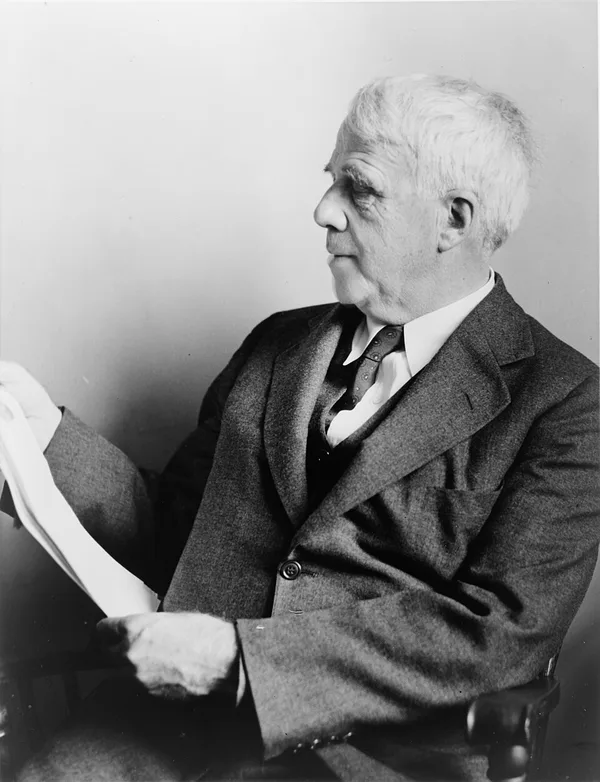
**Poet:** Robert Frost
Analytical Overview
1. Structure and Form
- The poem is composed of two stanzas, each mirroring the other in length and thematic content.
- It follows a simple AABB rhyme scheme, but the rhymes are not strictly conventional; instead, they rely on internal and half-rhymes that reinforce the pastoral setting.
- Each stanza opens with a declarative statement of intent, followed by an invitation that underscores communal participation.
2. Themes
- Connection to Nature: The narrator’s activities—cleaning the pasture, watching water clear, and caring for a calf—highlight an intimate relationship with the natural world.
- Community and Shared Labor: The repeated line “I sha'n't be gone long.—You come too.” invites the reader or companion to join, suggesting that pastoral tasks are collective experiences.
- Transience and Care: The fleeting nature of the narrator’s absence (“I sha'n't be gone long”) contrasts with the enduring presence of the calf and its mother, symbolizing continuity amid brief human interventions.
3. Language and Imagery
- The diction is colloquial (“sha'n't”), grounding the poem in everyday speech and reflecting a rustic voice.
- Imagery of “rake the leaves away” and “watch the water clear” evokes sensory details that anchor the reader in the pastoral environment.
- The calf’s description—“standing by the mother” and “totters when she licks it”—creates a tender, almost fragile tableau that contrasts with the robust action of cleaning.
4. Poetic Devices
- Repetition: The closing invitation in both stanzas serves as a refrain, emphasizing unity and shared responsibility.
- Paradox: The narrator promises a brief absence while simultaneously engaging in tasks that require sustained attention, reflecting the balance between effort and respite.
- Alliteration: “clean the pasture spring” and “fetch the little calf” create rhythmic cohesion.
5. Interpretation
- The poem can be read as a meditation on the cyclical rhythms of rural life, where labor and leisure intertwine.
- It also suggests an egalitarian ethos: everyone can contribute to the care of nature, and no task is too small when shared.
In sum, Robert Frost’s “The Pasture” is a succinct yet rich depiction of rural stewardship, communal bonds, and the gentle persistence of life in pastoral settings.
— art-ı sûni zeka
Note: this analysis was generated automatically and is still under development.
More poems by Robert Frost
People who read this also read
Picked for you from the reading habits of our literary commons.
Poem knowledge graph
A literary network built from the poet who wrote this poem and the words poems have in common.
Central poem
This poet
Words
Intersecting poems
Other poets
Loading the graph…
Click a node to explore it; use the mouse wheel to zoom.