
Etymology switcheroo
There is a smile of Love
And there is a Smile of Deceit
And there is a Smile of Smiles
In which these two Smiles meet
And there is a Frown of Hate
And there is a Frown of Disdain
And there is a Frown of Frowns
Which you strive to forget in vain
For it sticks in the Hearts deep Core
And it sticks in the deep Back bone
And no Smile that ever was smild
But only one Smile alone
That betwixt the Cradle & Grave
It only once Smild can be
But when it once is Smild
Theres an end to all Misery
Loading annotations...
Title and Authorship
- Poem Title: The Smile
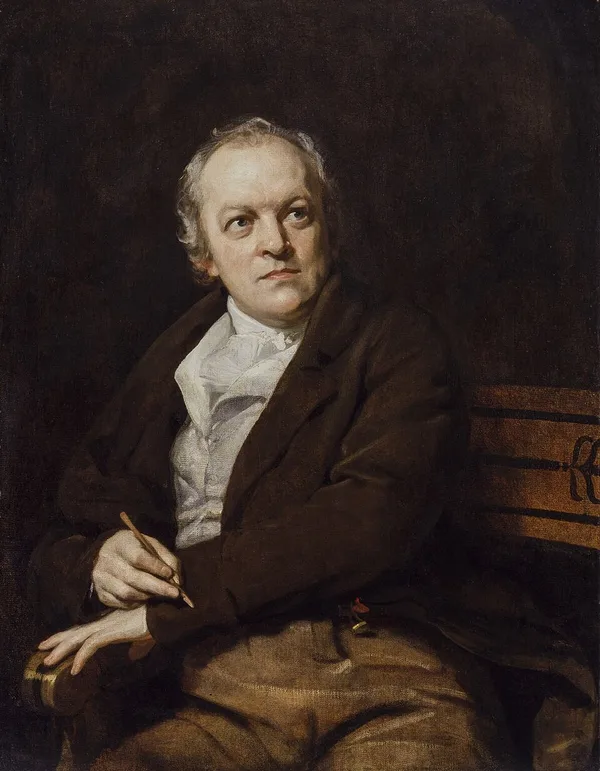
- Attributed Poet: William Blake (though no known record of such a poem by him exists; this may be a misattribution or a contemporary piece mistakenly credited to Blake).
Structural Overview
- The poem consists of three stanzas, each with four lines.
- It employs a refrain-like pattern: the first stanza repeats “Smile” in different contexts; the second uses “Frown”; the third returns to “Smile.”
- Rhyme scheme appears loosely ABAB in the first two stanzas, but the third breaks this pattern.
- The poem contains several orthographic anomalies (e.g., “smild,” “Theres”). These may be intentional for a particular effect or simply typographical errors.
Thematic Content
- The poem juxtaposes positive and negative affective expressions—smiles versus frowns—suggesting a duality in human experience.
- It proposes that the “Smile” can transcend both joy and deceit, while the “Frown” embodies hatred and disdain.
- There is a sense of inevitability: the “Frown” remains embedded in one’s heart and spine, hinting at lasting emotional scars.
- The concluding stanza offers a resolution: the only true smile lies between “Cradle & Grave,” implying that genuine happiness is found in life’s transient span, and when it appears, misery ends.
Stylistic Devices
- Repetition: Repeated use of “Smile” and “Frown” reinforces the central motifs.
- Alliteration: Words such as “Smile of Smiles” and “Frown of Frowns” create rhythmic emphasis.
- Contrast: The poem’s structure pits optimism against pessimism, creating tension.
- Imagery: “Cradle & Grave” evokes the full human life cycle, while references to the heart and spine suggest physical embodiment of emotions.
Potential Interpretations
- The poem can be read as a meditation on the dual nature of human expression, where even deceitful smiles carry an underlying truth.
- It may also be a philosophical statement: only when one experiences genuine joy within the human lifespan can suffering truly cease.
- Alternatively, the poem might critique social façades—smiles that mask deceit—and highlight how negative emotions can become internalized.
Critical Remarks
- The poem’s language is simplistic and occasionally inconsistent, which may limit its depth compared to Blake’s known works.
- Its ambiguous attribution to William Blake raises questions about authenticity; further scholarly verification would be advisable.
- Despite these concerns, the poem offers a clear and accessible exploration of emotional duality.
Conclusion
The piece presents a concise exploration of smiles and frowns, using repetition and contrast to examine how human emotions coexist. While stylistically straightforward, it conveys a universal theme: authentic joy can only exist within the finite span of life and can ultimately dissolve suffering.
Note: this analysis was generated automatically and is still under development.
More poems by William Blake
People who read this also read
Picked for you from the reading habits of our literary commons.
Poem knowledge graph
A literary network built from the poet who wrote this poem and the words poems have in common.
Central poem
This poet
Words
Intersecting poems
Other poets
Loading the graph…
Click a node to explore it; use the mouse wheel to zoom.