
Sonnet 116: 'Let me not to the marriage of true minds...'
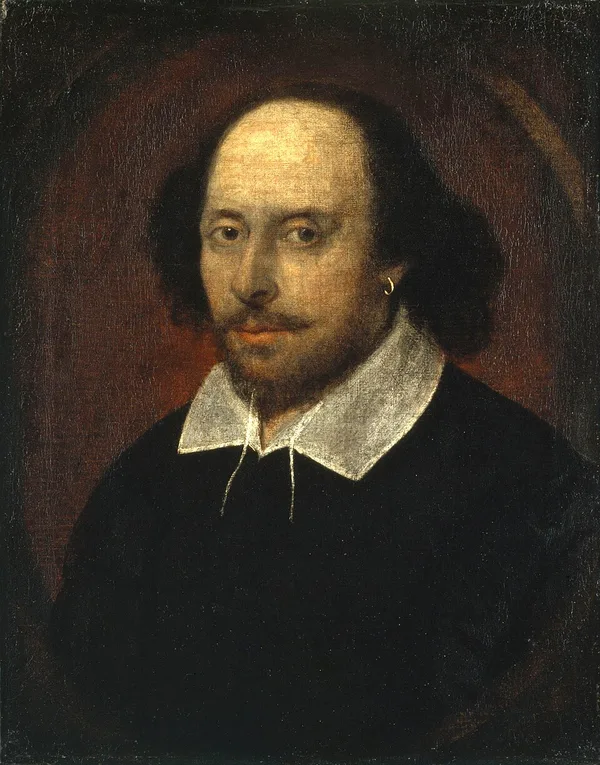
William Shakespeare
3
reads
Etymology switcheroo
Let me not to the marriage of true minds
Admit impediments. Love is not love
Which alters when it alteration finds,
Or bends with the remover to remove:
O no! it is an ever-fixed mark
That looks on tempests and is never shaken;
It is the star to every wandering bark,
Whose worth's unknown, although his height be taken.
Love's not Time's fool, though rosy lips and cheeks
Within his bending sickle's compass come:
Love alters not with his brief hours and weeks,
But bears it out even to the edge of doom.
If this be error and upon me proved,
I never writ, nor no man ever loved.
Loading annotations...
Poetry Analysis: Sonnet 116
Author: William Shakespeare (1564–1616)
1. Structure & Form
- Form: Shakespearean sonnet (14 lines, three quatrains + a couplet)
- Meter: Iambic pentameter (ten syllables per line, alternating unstressed/stressed)
- Rhyme scheme: ABAB CDCD EFEF GG (traditional Shakespearean pattern)
- Key devices: Metaphor, paradox, antithesis, repetition
2. Theme & Meaning
- Enduring Love: The poem asserts that true love is immutable, not subject to change or external forces.
- Metaphorical Stability: Love is likened to a fixed star guiding ships through storms, symbolizing constancy.
- Defiance of Time: Love resists the erosive effects of time (the “bending sickle” of Time).
- Authenticity vs. Appearance: The poem cautions against judging love by superficial changes (rosy lips, cheeks).
3. Literary Devices & Analysis
- Metaphor: “Ever‑fixed mark,” “star to every wandering bark.” Love is a celestial, immutable guide.
- Antithesis: “Love is not love which alters… or bends.” Contrast between mutable affection and true love.
- Repetition: The refrain “Love alters not” emphasizes constancy.
- Allusion: “Time’s fool” references the biblical lament of Psalm 78:12, reinforcing the idea that love outlasts time.
- Personification: Time is portrayed as a “bending sickle,” giving it a vivid, destructive image.
4. Historical & Cultural Context
- Elizabethan Courtly Love: The sonnet reflects contemporary debates on the nature of love—whether it is purely emotional or a higher, divine bond.
- Humanist Influence: Emphasis on enduring human virtues aligns with Renaissance humanism’s focus on the eternal qualities of humanity.
5. Modern Interpretation
- Love is portrayed as a timeless, guiding force that transcends physical change.
- The poem invites readers to seek authenticity in relationships, valuing depth over superficiality.
Conclusion: Shakespeare’s Sonnet 116 remains a timeless meditation on love’s constancy, using rich imagery and classical structure to argue that true affection endures beyond external shifts.
— art-ı sûni zeka
Note: this analysis was generated automatically and is still under development.
More poems by William Shakespeare
Winter (Love's Labor's Lost Act V, Scene 2)
(William Shakespeare)
Under The Greenwood Tree
(William Shakespeare)
Sonnet 18: Shall I Compare Thee to a Summer's Day
(William Shakespeare)
Sonnet 16: “But wherefore do not you a mightier way…”
(William Shakespeare)
To Be or Not to Be (Hamlet Act III, Scene 1)
(William Shakespeare)
The Dark Lady Sonnets (127 - 154)
(William Shakespeare)
People who read this also read
Picked for you from the reading habits of our literary commons.
Poem knowledge graph
A literary network built from the poet who wrote this poem and the words poems have in common.
Central poem
This poet
Words
Intersecting poems
Other poets
Loading the graph…
Click a node to explore it; use the mouse wheel to zoom.