
To Be or Not to Be (Hamlet Act III, Scene 1)
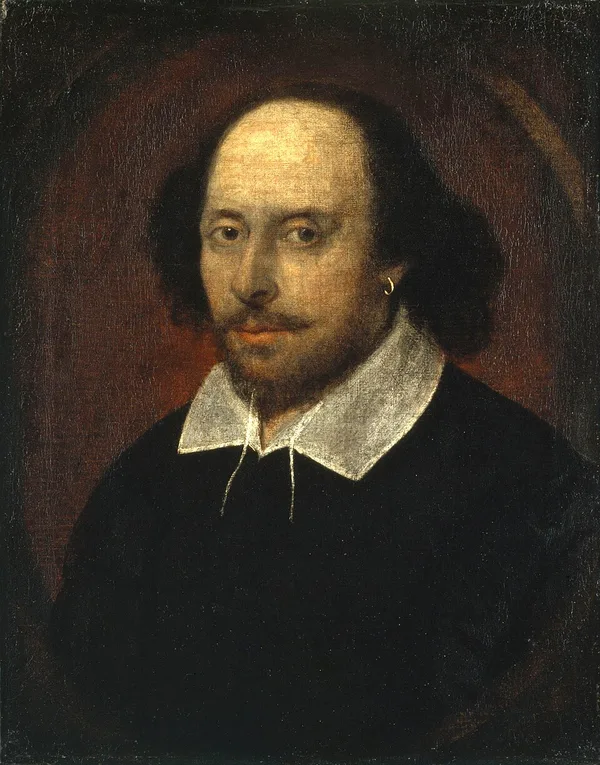
William Shakespeare
5
reads
Etymology switcheroo
To be, or not to be, that is the question:
Whether 'tis nobler in the mind to suffer
The slings and arrows of outrageous fortune,
Or to take arms against a sea of troubles
And by opposing end them. To die—to sleep,
No more; and by a sleep to say we end
The heart-ache and the thousand natural shocks
That flesh is heir to: 'tis a consummation
Devoutly to be wish'd. To die, to sleep;
To sleep, perchance to dream—ay, there's the rub:
For in that sleep of death what dreams may come,
When we have shuffled off this mortal coil,
Must give us pause—there's the respect
That makes calamity of so long life.
For who would bear the whips and scorns of time,
The oppressor's wrong, the proud man's contumely,
The pangs of dispriz'd love, the law's delay,
The insolence of office, and the spurns
That patient merit of the unworthy takes,
When he himself might his quietus make
With a bare bodkin? Who would fardels bear,
To grunt and sweat under a weary life,
But that the dread of something after death,
The undiscovered country from whose bourn
No traveller returns, puzzles the will,
And makes us rather bear those ills we have
Than fly to others that we know not of?
Thus conscience does make cowards of us all,
And thus the native hue of resolution
Is sicklied o'er with the pale cast of thought,
And enterprises of great pitch and moment
With this regard their currents turn awry
And lose the name of action.
contumely - insult
quietus - i.e., the quiet of death
bodkin - dagger
fardels - burdens
Loading annotations...
Title & Context
- To Be or Not to Be (Hamlet Act III, Scene 1) is the famous soliloquy delivered by Prince Hamlet in Shakespeare’s tragedy. The passage grapples with existential doubt, the value of life versus death, and the weight of human suffering.
Poetic Structure
- Form: Though often printed as a prose passage, the soliloquy is essentially a dramatic monologue with rhythmic variations. Shakespeare uses iambic pentameter as the backbone, but he frequently interrupts the meter to mirror Hamlet’s wavering thoughts.
- Stanzas: The text is commonly divided into two thematic blocks: the contemplation of suffering and the philosophical argument about death’s unknowns. The division is not formal but arises from shifts in imagery and diction.
Key Themes & Motifs
- Existential Inquiry: The opening question, “To be, or not to be,” frames the entire soliloquy as a philosophical inquiry into existence.
- Mortality & Death: Hamlet personifies death as “sleep” and discusses the unknowns of the afterlife (“the undiscovered country”).
- Human Suffering: He lists a litany of woes—“whips,” “scorns,” “pangs”—highlighting the burdens that make life unbearable.
- Action vs. Inaction: The final lines reflect on how fear and contemplation paralyze, turning “great pitch and moment” into inertia.
Lexical Highlights
- Contumely: “insult” – underscores the disdain Hamlet feels toward society.
- Quietus: “the quiet of death” – a euphemism for suicide.
- Bodkin: “dagger” – a literal instrument of self‑termination.
- Fardels: “burdens” – the weight of life’s hardships.
Stylistic Devices
- Alliteration: “slings and arrows,” “sea of troubles.”
- Metaphor: Life as a “mortal coil,” death as an unknown country.
- Anaphora: Repetition of “to die, to sleep” emphasizes the cyclical nature of thought.
- Antithesis: “to be or not to be” juxtaposes existence with non‑existence.
Interpretive Angles
- Psychological: Hamlet’s soliloquy can be read as a deep dive into depression and anxiety, where the paralysis of choice reflects mental health struggles.
- Philosophical: The passage engages with Stoic and Epicurean ideas about the nature of suffering, the virtue of endurance, and the fear of the unknown.
- Political: The “oppressor’s wrong” hints at the corrupt state Hamlet faces, making his personal crisis also a critique of governance.
Conclusion
The soliloquy remains a masterful exploration of the human condition. Shakespeare’s blend of lyrical language, rhythmic variation, and profound thematic content ensures that “To be or not to be” continues to resonate with readers and audiences seeking insight into the paradoxes of life.
Note: this analysis was generated automatically and is still under development.
More poems by William Shakespeare
Winter (Love's Labor's Lost Act V, Scene 2)
(William Shakespeare)
Under The Greenwood Tree
(William Shakespeare)
Sonnet 116: 'Let me not to the marriage of true minds...'
(William Shakespeare)
Sonnet 18: Shall I Compare Thee to a Summer's Day
(William Shakespeare)
Sonnet 16: “But wherefore do not you a mightier way…”
(William Shakespeare)
The Dark Lady Sonnets (127 - 154)
(William Shakespeare)
People who read this also read
Picked for you from the reading habits of our literary commons.
Poem knowledge graph
A literary network built from the poet who wrote this poem and the words poems have in common.
Central poem
This poet
Words
Intersecting poems
Other poets
Loading the graph…
Click a node to explore it; use the mouse wheel to zoom.