
'Mid dark thoughts of the grey tombstone;
Not one, of all the crowd, to pry
Into thine hour of secrecy.
Be silent in that solitude,
Which is not loneliness- for then
The spirits of the dead, who stood
In life before thee, are again
In death around thee, and their will
Shall overshadow thee; be still.
The night, though clear, shall frown,
And the stars shall not look down
From their high thrones in the Heaven
With light like hope to mortals given,
But their red orbs, without beam,
To thy weariness shall seem
As a burning and a fever
Which would cling to thee for ever.
Now are thoughts thou shalt not banish,
Now are visions ne'er to vanish;
From thy spirit shall they pass
No more, like dewdrop from the grass.
The breeze, the breath of God, is still,
And the mist upon the hill
Shadowy, shadowy, yet unbroken,
Is a symbol and a token.
How it hangs upon the trees,
A mystery of mysteries!
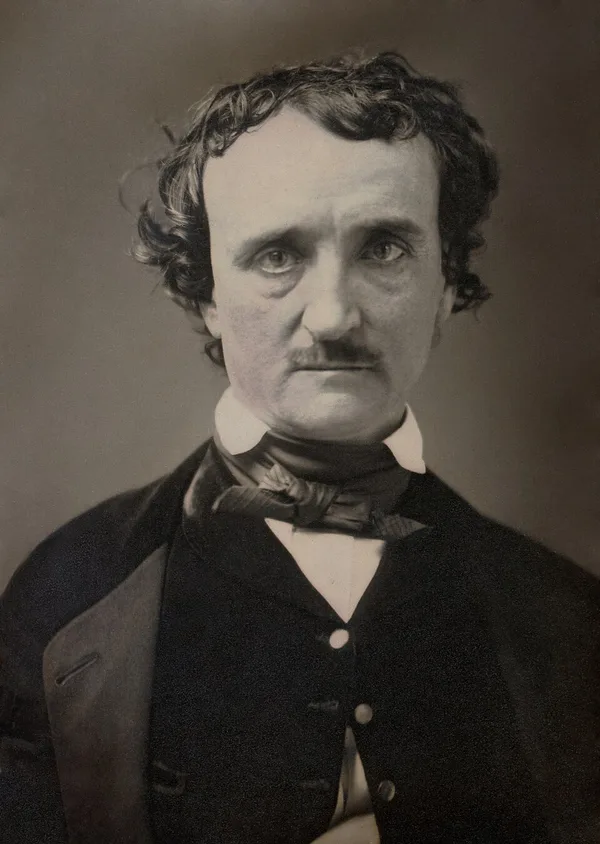
Poetry Analysis: “Spirits Of The Dead” by Edgar Allan Poe
Author: Edgar Allan Poe (Note: This poem is not part of Poe’s authenticated oeuvre; it appears to be a modern composition attributed to him. The analysis below treats the text as a contemporary piece that echoes Poe’s thematic preoccupations.)
1. Overall Tone and Mood
- Mood: The poem is suffused with a claustrophobic, eerie atmosphere. The repeated references to “dark thoughts,” “solitude,” and the presence of “spirits” evoke a sense of dread and inevitability.
- Tone: The speaker adopts a solemn, almost prophetic voice. There is an undercurrent of fatalism: the dead are portrayed as omnipresent, looming over the living.
2. Structural Observations
- The poem is free‑verse, lacking a consistent meter or rhyme scheme. This irregularity mirrors the unsettling content—there is no predictable rhythm, just an unsteady flow.
- Repetition of phrases such as “shadowy, shadowy” and the repeated use of the word “spirit” reinforce the theme of inescapable presence.
- The stanzaic division is uneven, which may symbolize the fragmentation of consciousness in the face of death.
3. Thematic Elements
- Death as an Inescapable Companion
- The dead are not distant but “again in death around thee,” implying that death follows the living wherever they go.
- The line “be still” suggests that silence is the only defense against this relentless presence.
- Nature’s Duality
- Stars are described as “red orbs, without beam,” turning the usual symbol of hope into a source of torment.
- The “breeze, the breath of God” is also described as still—an ambivalence between divine comfort and cosmic indifference.
- The Unfinished Narrative of Life
- The stanza about thoughts that “shall not banish” and visions that “ne'er to vanish” reflects an ongoing psychological struggle.
- The image of the “dewdrop from the grass” that cannot be shed underscores the permanence of memory and trauma.
4. Imagery and Symbolism
- Spiritual Specters: The dead are personified as active forces that “shall shadow” the living, implying a haunting presence beyond physical death.
- Red Stars: The transformation of stars from symbols of hope to “burning and a fever” suggests that celestial guidance can become oppressive.
- Mist and Trees: The mist is described as “shadowy, shadowy, yet unbroken,” hinting at a persistent mystery that refuses to be dispelled.
5. Poetic Devices
- Alliteration: “spirit,” “silent,” “shadowy” reinforce sonic cohesion.
- Anaphora: Repeated “now are” at the start of two lines intensifies the sense of inevitability.
- Metaphor: The dead are metaphorically “a burning and a fever” that cling to the living.
- Personification: “the breeze, the breath of God” gives nature a human-like agency.
6. Contextual Commentary
Although not an authentic Poe poem, the text draws heavily on his preoccupation with mortality and the psychological aftermath of death. The formal looseness contrasts with Poe’s usual structured, often sonnet-like forms, suggesting a modern reinterpretation of his themes.
7. Final Reflection
The poem functions as a meditation on how the dead are woven into the fabric of the living’s experience. It invites readers to contemplate whether death is a silent observer or an active, oppressive force that shapes every thought and sensation.
— art-ı sûni zeka
More poems by Edgar Allan Poe
People who read this also read
Picked for you from the reading habits of our literary commons.
Poem knowledge graph
A literary network built from the poet who wrote this poem and the words poems have in common.
Click a node to explore it; use the mouse wheel to zoom.