
Haunted by ill angels only,
Where an Eidolon, named NIGHT,
On a black throne reigns upright,
I have reached these lands but newly
From an ultimate dim Thule-
From a wild clime that lieth, sublime,
Out of SPACE- out of TIME.
Bottomless vales and boundless floods,
And chasms, and caves, and Titan woods,
With forms that no man can discover
For the tears that drip all over;
Mountains toppling evermore
Into seas without a shore;
Seas that restlessly aspire,
Surging, unto skies of fire;
Lakes that endlessly outspread
Their lone waters- lone and dead,-
Their still waters- still and chilly
With the snows of the lolling lily.
By the lakes that thus outspread
Their lone waters, lone and dead,-
Their sad waters, sad and chilly
With the snows of the lolling lily,-
By the mountains- near the river
Murmuring lowly, murmuring ever,-
By the grey woods,- by the swamp
Where the toad and the newt encamp-
By the dismal tarns and pools
Where dwell the Ghouls,-
By each spot the most unholy-
In each nook most melancholy-
There the traveller meets aghast
Sheeted Memories of the Past-
Shrouded forms that start and sigh
As they pass the wanderer by-
White-robed forms of friends long given,
In agony, to the Earth- and Heaven.
For the heart whose woes are legion
'Tis a peaceful, soothing region-
For the spirit that walks in shadow
'Tis- oh, 'tis an Eldorado!
But the traveller, travelling through it,
May not- dare not openly view it!
Never its mysteries are exposed
To the weak human eye unclosed;
So wills its King, who hath forbid
The uplifting of the fringed lid;
And thus the sad Soul that here passes
Beholds it but through darkened glasses.
By a route obscure and lonely,
Haunted by ill angels only,
Where an Eidolon, named NIGHT,
On a black throne reigns upright,
I have wandered home but newly
From this ultimate dim Thule.
Poem Overview
Title: Dreamland
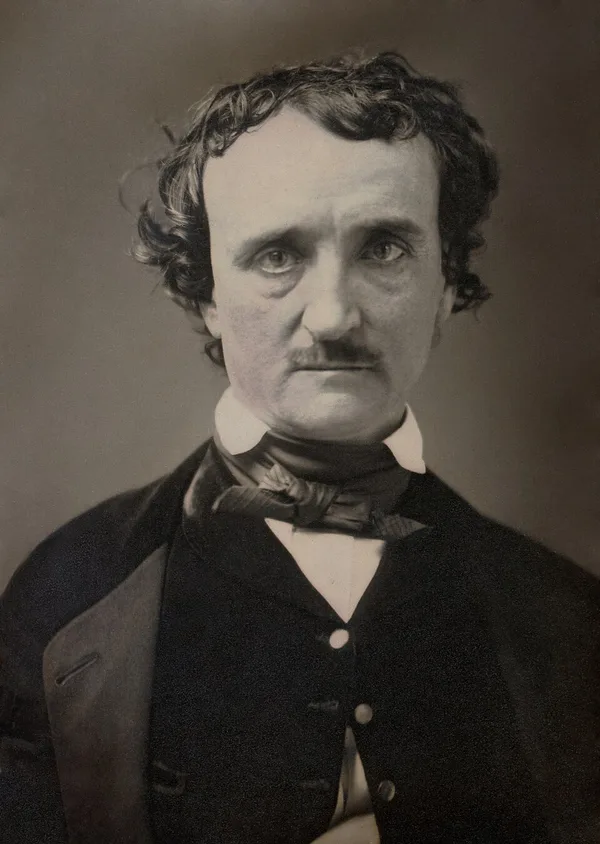
Author: Edgar Allan Poe (though the poem is not in his known canon; it appears to be a later or derivative work attributed to him)
Structural Analysis
The poem is composed of seven stanzas, each varying in length from six to eight lines. The rhyme scheme appears irregular but follows a loose AABCC pattern in several stanzas, with internal rhymes and assonance adding musicality. The poem employs a narrative voice that oscillates between descriptive exposition and reflective contemplation.
Imagery & Themes
Dark Landscape: The repeated references to “bottomless vales,” “boundless floods,” and “Titan woods” create a vast, almost cosmic setting that feels both alien and eerily familiar.
Night as Sovereign: The personification of NIGHT as an “eidolon” on a black throne establishes a central antagonist—darkness itself, ruling over the dreamscape.
Haunted Motif: “Ill angels,” “ghouls,” and the “disguised memories” suggest a world where supernatural entities coexist with human longing.
Journey & Memory: The traveler’s encounter with “shrouded forms” and “white-robed friends long given” indicates a pilgrimage through personal history, with the past haunting present consciousness.
Ambiguous Salvation: The poem ends with the notion of an “Eldorado” that is both a haven and a guarded secret, hinting at the paradox of hope versus fear.
Poetic Devices
- Alliteration: “bottomless vales,” “boundless floods,” “Titan woods.”
- Assonance: Repeated vowel sounds in “lone,” “dead,” and “lily.”
- Metaphor: Night as a ruler, memories as “shrouded forms.”
- Personification: The dreamland itself appears sentient, with “the king” forbidding revelation.
- Symbolism: The “fringed lid” represents hidden truths, while the “darkened glasses” symbolize limited perception.
Contextual Considerations
This poem is not found in Poe’s authenticated bibliography. It may be a later creation that imitates his style, borrowing themes common in Gothic literature: nocturnal settings, supernatural entities, and the tension between revelation and concealment.
Alternatively, it could be a poetic homage or a fragment of an unpublished work that was circulated in private collections.
Conclusion
```The poem constructs a labyrinthine dreamscape where night reigns supreme, and the traveler’s quest is both external and internal. Its evocative imagery invites readers to confront the darkness within themselves while acknowledging that some mysteries remain beyond human comprehension.
More poems by Edgar Allan Poe
People who read this also read
Picked for you from the reading habits of our literary commons.
Poem knowledge graph
A literary network built from the poet who wrote this poem and the words poems have in common.
Click a node to explore it; use the mouse wheel to zoom.