

and the little churchyard there, with its sorrowing names,
and the frighteningly silent abyss into which the others
fall: again and again the two of us walk out together
under the ancient trees, lie down again and again
among the flowers, face to face with the sky.
Translated by Stephen Mitchell
Poem Title: Again And Again…
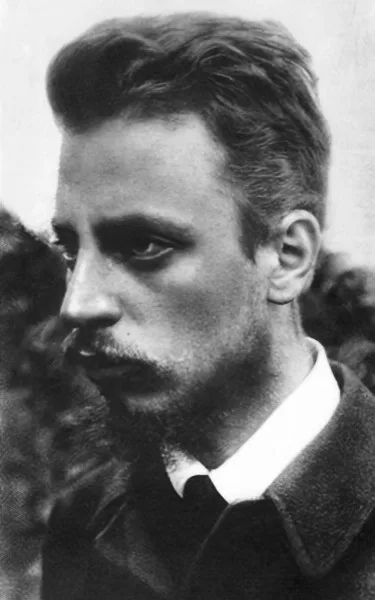
Author: Rainer Maria Rilke
Translator: Stephen Mitchell
Poetic Analysis
Rilke’s fragmentary verse invites the reader into a contemplative landscape where repetition and intimacy intertwine. The poem’s structure—short, elliptical lines punctuated by enjambments—mirrors the cyclical nature of love and memory it describes.
Imagery and Setting
- Landscape of Love: The “landscape” is a metaphor for the emotional terrain that lovers navigate. It suggests familiarity and depth, as if the couple has mapped it through experience.
- Little Churchyard: This evokes a place of reverence and mourning, hinting at the weight of past grief or vows that linger in their shared space.
- Frighteningly Silent Abyss: The abyss may represent the unknown or void that others fall into—perhaps a warning against isolation or the dangers of stepping outside their shared world.
Repetition as Theme
The refrain “again and again” functions on multiple levels:
- It signals the habitual nature of their walks and moments together, emphasizing stability.
- It underscores the persistence of memory—each walk re-creates the same emotional landscape.
- It hints at a cyclical pattern of love that is both comforting and potentially repetitive.
Interpersonal Dynamics
The poem describes two people moving “together under the ancient trees,” suggesting mutual support and shared history. The act of lying down among flowers implies vulnerability and trust, while “face to face with the sky” elevates their intimacy to a universal level.
Translation Considerations
Stephen Mitchell’s translation preserves Rilke’s concise, resonant language while making it accessible to contemporary readers. His choice of words—especially the use of “sorrowing names” and “frighteningly silent abyss”—maintains the original’s melancholic tone.
Concluding Observations
This poem encapsulates a quiet, almost meditative love that persists through time and adversity. Its imagery paints both the sanctity of shared moments and the underlying tension that others may experience when they cannot find a similar path. The repeated motifs reinforce the idea that love, like a landscape, is both familiar and ever‑present, inviting continuous exploration.
More poems by Rainer Maria Rilke
People who read this also read
Picked for you from the reading habits of our literary commons.
Poem knowledge graph
A literary network built from the poet who wrote this poem and the words poems have in common.
Click a node to explore it; use the mouse wheel to zoom.