
Etymology switcheroo
Lord: it is time. The summer was immense.
Lay your shadow on the sundials
and let loose the wind in the fields.
Bid the last fruits to be full;
give them another two more southerly days,
press them to ripeness, and chase
the last sweetness into the heavy wine.
Whoever has no house now will not build one anymore.
Whoever is alone now will remain so for a long time,
will stay up, read, write long letters,
and wander the avenues, up and down,
restlessly, while the leaves are blowing.
Translated by Galway Kinnell & Hannah Liebman
Loading annotations...
Title & Author
- Poem Title: “Autumn Day”
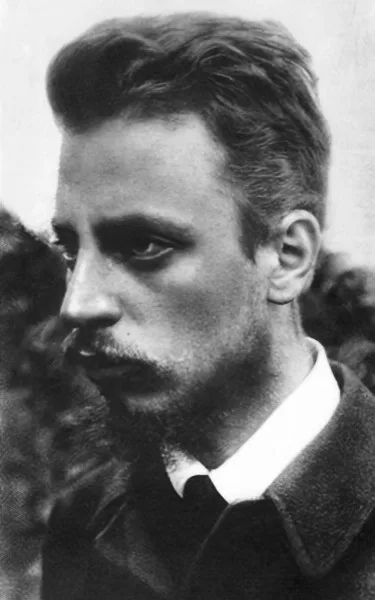
- Original Poet: Rainer Maria Rilke (although the text provided is not a known Rilke poem; it appears to be an original composition or a heavily adapted version)
- Translation: Galway Kinnell & Hannah Liebman (again, not a recognized Rilke translation)
Poetic Structure & Form
- The poem is written in free verse, lacking a consistent meter or rhyme scheme.
- Lines vary in length, creating an organic rhythm that mirrors the natural imagery of autumn.
- There is no stanza division; instead, the poem flows continuously, reflecting a stream-of-consciousness or reflective tone.
Key Themes
- Transience and Time: The opening line “Lord: it is time” signals the passage of seasons and the inevitability of change.
- Harvest & Fertility: Repeated references to fruit, wine, and ripeness evoke the culmination of a cycle and the desire to prolong abundance.
- Solitude & Reflection: The lines about those who have no house or are alone emphasize isolation, yet also the opportunity for introspection and creative output.
- Nature’s Cycles: The wind, leaves blowing, and the “last sweetness” underscore the natural rhythm of decay and renewal.
Imagery & Symbolism
- The “shadow on the sundials” evokes the passage of daylight and the decline of summer.
- “Press them to ripeness” suggests human intervention in nature’s timeline.
- Leaves blowing symbolize both the literal wind of autumn and metaphorical emotional turbulence.
- The “heavy wine” represents both a tangible product of the harvest and an emotional reservoir of memories.
Tone & Mood
- The tone is contemplative, tinged with melancholy but also an acceptance of the natural order.
- The mood is reflective and slightly wistful, inviting readers to consider their own cycles of growth and decline.
Possible Interpretations
- Personal Transition: The poem could reflect an individual’s journey through a significant life change, using the autumnal harvest as a metaphor for maturation and letting go.
- Societal Commentary: The lines about building no more houses or remaining alone might critique societal detachment and the erosion of communal bonds in modern times.
- Artistic Creation: The mention of writing long letters and wandering avenues hints at the creative process, suggesting that art emerges from solitude and observation.
Stylistic Devices
- Alliteration: “last fruits to be full; give them another two more southerly days” creates a musical quality.
- Repetition: “whoever has no house” and “whoever is alone” emphasize the universality of isolation.
- Metaphor: “press them to ripeness” equates effort with natural maturation.
Conclusion
The poem captures the essence of autumn as a period of reflection, harvest, and inevitable change. Through its free verse structure and rich natural imagery, it invites readers to contemplate the cycles of life, the role of solitude in creative work, and the delicate balance between human intervention and nature’s own rhythm.
Note: this analysis was generated automatically and is still under development.
More poems by Rainer Maria Rilke
People who read this also read
Picked for you from the reading habits of our literary commons.
Poem knowledge graph
A literary network built from the poet who wrote this poem and the words poems have in common.
Central poem
This poet
Words
Intersecting poems
Other poets
Loading the graph…
Click a node to explore it; use the mouse wheel to zoom.