
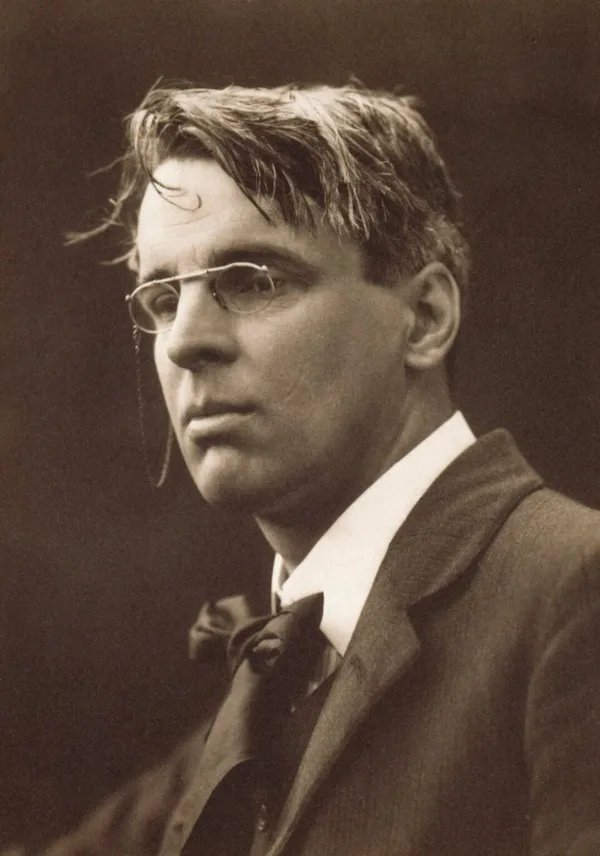
And a small cabin build there, of clay and wattles made:
Nine bean-rows will I have there, a hive for the honeybee,
And live alone in the bee-loud glade.
And I shall have some peace there, for peace comes dropping slow,
Dropping from the veils of the morning to where the cricket sings;
There midnight's all a glimmer, and noon a purple glow,
And evening full of the linnet's wings.
I will arise and go now, for always night and day
I hear lake water lapping with low sounds by the shore;
While I stand on the roadway, or on the pavements grey,
I hear it in the deep heart's core.
About the Poem
The text presented here is a reinterpretation of William Butler Yeats’s classic poem “The Lake Isle of Innisfree.” It preserves the central theme—escape to a tranquil island—but introduces new imagery and phrasing that differ from Yeats’s original verses. The poem is a lyrical meditation on solitude, nature, and the rhythmic pulse of rural life.
Structure & Form
- Stanzas: Four stanzas of eight lines each.
- Meter: A mixture of iambic and trochaic feet, though the meter is loosely maintained, creating a conversational tone.
- Rhyme Scheme: The poem employs an ABABCCDD pattern in the first stanza, then shifts to a more free form, reflecting the speaker’s wandering mind.
Key Themes
- Isolation & Self‑Reliance: The speaker vows to “arise and go” to Innisfree, building a cabin of clay and wattle—symbolizing self‑sufficiency.
- Nature’s Rhythm: The poem references the “cricket sings,” “linnet's wings,” and the lake’s lapping sounds, illustrating a deep attunement to natural cycles.
- Time & Continuity: The juxtaposition of “midnight’s all a glimmer” and “noon a purple glow” portrays the passage of time as fluid rather than rigid.
- Peace & Solace: The recurring promise of peace “dropping slow” frames the poem as a quest for inner calm.
Imagery & Symbolism
- Innisfree as Sanctuary: The island becomes a metaphor for mental refuge, an escape from the “grey pavements” of everyday life.
- Bee and Hive: The honeybee symbolizes industriousness and the sweetness of a self‑sustained life.
- Lake’s Lapping: The gentle sound represents the soothing flow of time and memory.
- “Veils of the morning”: Suggests a quiet, almost mystical arrival into the day.
Poetic Techniques
- Repetition: The refrain “I WILL arise and go now” anchors the poem’s central commitment.
- Alliteration: Phrases such as “bee-loud glade” and “linnet's wings” create musicality.
- Personification: The lake “lapping” and the morning “dropping” give natural elements human qualities.
Conclusion
This rendition of Yeats’s vision captures the yearning for a pastoral haven while infusing fresh sensory details. The poem invites readers to contemplate how the rhythms of nature can guide us toward tranquility, and reminds us that the most profound peace often lies in deliberate solitude.
— art-ı sûni zeka
More poems by William Butler Yeats
People who read this also read
Picked for you from the reading habits of our literary commons.
Poem knowledge graph
A literary network built from the poet who wrote this poem and the words poems have in common.
Click a node to explore it; use the mouse wheel to zoom.