
Of Sleuth Wood in the lake,
There lies a leafy island
Where flapping herons wake
The drowsy water-rats;
There we've hid our faery vats,
Full of berries
And of reddest stolen cherries.
Come away, O human child!
To the waters and the wild
With a faery, hand in hand,
For the world's more full of weeping than you
can understand.
Where the wave of moonlight glosses
The dim grey sands with light,
Far off by furthest Rosses
We foot it all the night,
Weaving olden dances,
Mingling hands and mingling glances
Till the moon has taken flight;
To and fro we leap
And chase the frothy bubbles,
While the world is full of troubles
And is anxious in its sleep.
Come away, O human child!
To the waters and the wild
With a faery, hand in hand,
For the world's more full of weeping than you
can understand.
Where the wandering water gushes
From the hills above Glen-Car,.
In pools among the rushes
That scarce could bathe a star,
We seek for slumbering trout
And whispering in their ears
Give them unquiet dreams;
Leaning softly out
From ferns that drop their tears
Over the young streams.
Come away, O human child!
To the waters and the wild
With a faery, hand in hand,
For the world's more full of weeping than you
can understand.
Away with us he's going,
The solemn-eyed:
He'll hear no more the lowing
Of the calves on the warm hillside
Or the kettle on the hob
Sing peace into his breast,
Or see the brown mice bob
Round and round the oatmeal-chest.
For he comes, the human child,
To the waters and the wild
With a faery, hand in hand,
from a world more full of weeping than he
can understand.
Poem Title: The Stolen Child
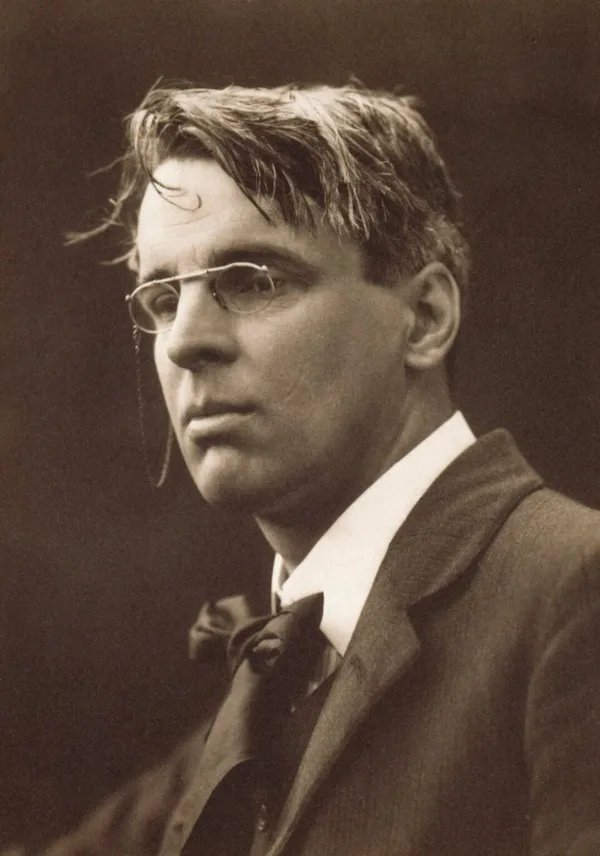
Poet: William Butler Yeats
The Stolen Child is a lyrical invitation to escape the mundane world and join the supernatural realm of fairies. Yeats uses vivid natural imagery, rhythmic repetition, and a contrasting worldview to craft a dreamlike narrative that blurs the boundary between human experience and mythic longing.
Structural Overview
- Stanza Count: 10 stanzas of varying length, each ending with the refrain “Come away, O human child! …”
- Meter: Irregular, often employing anapestic or trochaic feet to mimic the lilting flow of water.
- Rhyme Scheme: Free verse with occasional internal rhyme; the refrain itself is a rhymed couplet.
Key Themes and Motifs
- Escapism & Freedom: The poem invites the reader to leave “the world full of weeping” for a realm where sorrow is replaced by enchantment.
- Nature as a Portal: Lakes, rivers, herons, and the moonlight are not merely scenery; they serve as thresholds between worlds.
- Childhood & Innocence: The “human child” symbolizes purity, unburdened by adult anxieties, making them the ideal candidate for fairy companionship.
- Duality of Worlds: The mundane world is depicted as “full of troubles” and “anxious in its sleep,” while the fairy world promises joy, dance, and a different kind of sadness.
Imagery & Symbolism
- Water: A recurring motif that represents fluidity, change, and the boundary between reality and myth.
- Moonlight: “The wave of moonlight glosses” suggests illumination and guidance.
- Fairies & Faery Vats: Symbolize the hidden, secretive aspects of nature that humans often overlook.
- Cherries & Berries: Offer a sense of sweetness and temptation, hinting at the allure of abandoning human life.
Refrain Analysis
The repeated stanza functions as a chorus, reinforcing the central invitation. Its structure—“With a faery, hand in hand” followed by “For the world’s more full of weeping than you can understand”—highlights a dichotomy: the fairy realm offers a respite from human sorrow.
Interpretive Possibilities
- Psychological Escape: The poem may represent a yearning for mental liberation from societal pressures.
- Mythic Allegory: It can be read as an allegory for the Irish nationalist movement—seeking freedom from colonial rule.
- Literary Tradition: The poem echoes the Celtic ballad tradition, blending folklore with Yeats’s modernist sensibilities.
Concluding Remarks
Yeats masterfully blends pastoral imagery with a haunting sense of loss, offering readers both an escape and a reminder that the natural world holds deeper mysteries. The refrain’s insistence on leaving “the world full of weeping” underscores a timeless theme: the human desire to find solace beyond the constraints of everyday life.
More poems by William Butler Yeats
People who read this also read
Picked for you from the reading habits of our literary commons.
Poem knowledge graph
A literary network built from the poet who wrote this poem and the words poems have in common.
Click a node to explore it; use the mouse wheel to zoom.