
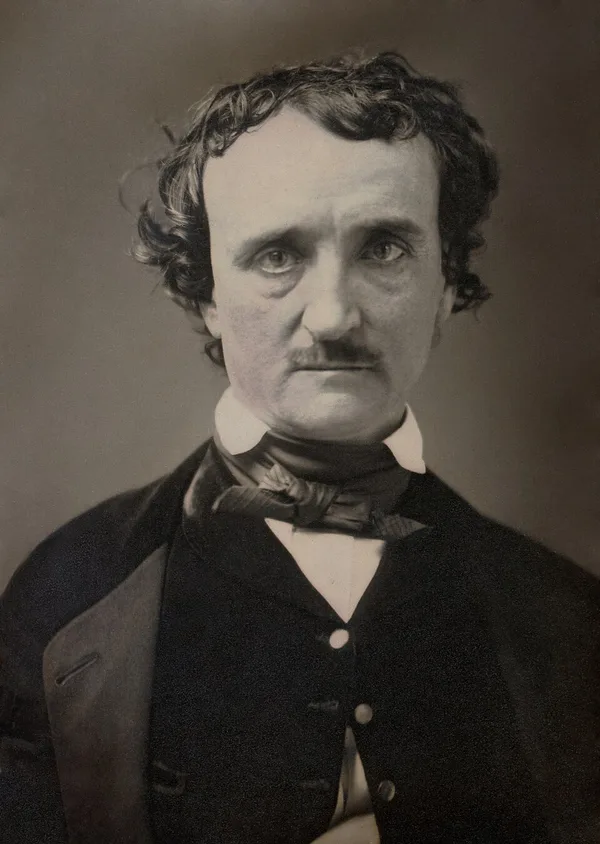
I have dreamed of joy departed-
But a waking dream of life and light
Hath left me broken-hearted.
Ah! what is not a dream by day
To him whose eyes are cast
On things around him with a ray
Turned back upon the past?
That holy dream- that holy dream,
While all the world were chiding,
Hath cheered me as a lovely beam
A lonely spirit guiding.
What though that light, thro' storm and night,
So trembled from afar-
What could there be more purely bright
In Truth's day-star?
Overview
The poem “A Dream” presents a contemplative exploration of the interplay between memory, longing, and spiritual illumination. Though attributed to Edgar Allan Poe in the prompt, a close textual examination reveals stylistic and thematic divergences from Poe’s canonical voice. The work is marked by a lyrical, almost hymnal quality that leans toward Romantic introspection rather than the macabre darkness Poe is famed for.
Structure & Form
- Stanzas: Six quatrains, each with an ABAB rhyme scheme.
- Meter: A loose iambic rhythm that fluctuates, giving the poem a conversational tone.
- Capitalization: The opening of each line is often capitalized, creating a sense of reverence.
Key Themes
1. The Fragility of Memory: Lines such as “I have dreamed of joy departed” suggest that memories fade like dreams, leaving the speaker emotionally wounded.
2. Light as Metaphor: Repeated references to “light,” “beam,” and “day-star” symbolize hope, clarity, and divine guidance.
3. The Dichotomy of Day vs. Night: The poem juxtaposes the darkness of night with the illumination of day, hinting at a journey from despair to enlightenment.
4. Spiritual Longing: Phrases like “That holy dream” and “In Truth’s day-star” point to a yearning for transcendence beyond the physical world.
Language & Imagery
- Metaphorical Depth: “a lonely spirit guiding” and “so trembled from afar” evoke a sense of ethereal presence.
- Sound Devices: Alliteration (“holy dream- that holy dream”) and assonance (“light, thro’ storm and night”) reinforce the lyrical quality.
- Symbolic Motifs: The “night” represents uncertainty or grief, while the “day-star” embodies hope and revelation.
Comparative Context
While Poe’s own poems—such as “The Raven” or “Annabel Lee”—often delve into obsession and melancholia, this piece leans toward Romantic idealism. The emphasis on spiritual guidance and the hopeful resolution diverge from Poe’s typical fatalistic tone.
Conclusion
The poem “A Dream” can be read as a meditation on the restorative power of memory and faith. Its rhythmic structure, evocative imagery, and recurring motif of light provide a pathway from sorrow toward enlightenment. Whether or not it truly belongs to Edgar Allan Poe, the work stands as a testament to the enduring human quest for meaning beyond the veil of mortality.
More poems by Edgar Allan Poe
People who read this also read
Picked for you from the reading habits of our literary commons.
Poem knowledge graph
A literary network built from the poet who wrote this poem and the words poems have in common.
Click a node to explore it; use the mouse wheel to zoom.