
In a kingdom by the sea,
That a maiden there lived whom you may know
By the name of ANNABEL LEE;
And this maiden she lived with no other thought
Than to love and be loved by me.
I was a child and she was a child,
In this kingdom by the sea;
But we loved with a love that was more than love-
I and my Annabel Lee;
With a love that the winged seraphs of heaven
Coveted her and me.
And this was the reason that, long ago,
In this kingdom by the sea,
A wind blew out of a cloud, chilling
My beautiful Annabel Lee;
So that her highborn kinsman came
And bore her away from me,
To shut her up in a sepulchre
In this kingdom by the sea.
The angels, not half so happy in heaven,
Went envying her and me-
Yes!- that was the reason (as all men know,
In this kingdom by the sea)
That the wind came out of the cloud by night,
Chilling and killing my Annabel Lee.
But our love it was stronger by far than the love
Of those who were older than we-
Of many far wiser than we-
And neither the angels in heaven above,
Nor the demons down under the sea,
Can ever dissever my soul from the soul
Of the beautiful Annabel Lee.
For the moon never beams without bringing me dreams
Of the beautiful Annabel Lee;
And the stars never rise but I feel the bright eyes
Of the beautiful Annabel Lee;
And so, all the night-tide, I lie down by the side
Of my darling- my darling- my life and my bride,
In the sepulchre there by the sea,
In her tomb by the sounding sea.
Poem Title and Author
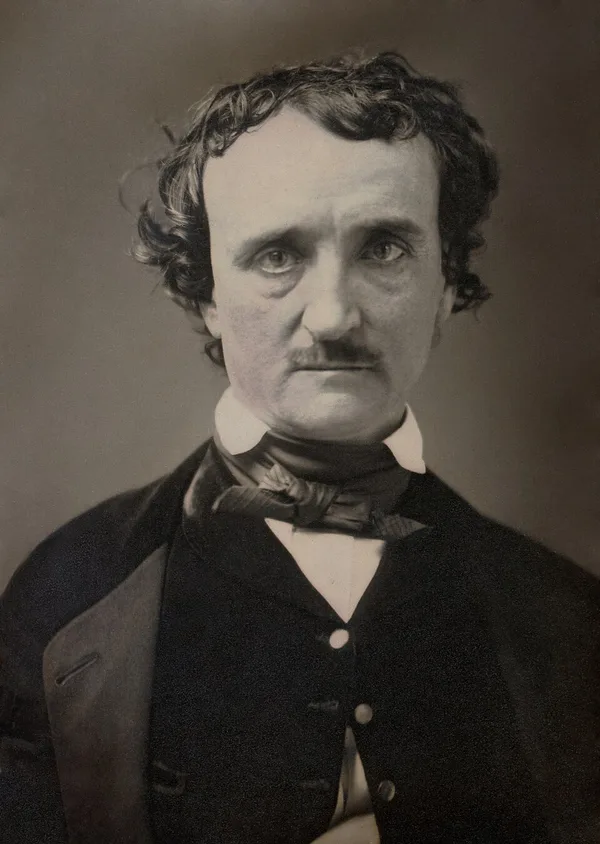
Annabel Lee by Edgar Allan Poe
Form and Structure
Poe structures the poem in a single, continuous stanza of 32 lines. The rhyme scheme follows an AABB pattern throughout, creating a musical, almost lullaby‑like rhythm. The repetition of the phrase “in this kingdom by the sea” anchors the poem’s setting and reinforces its dream‑like quality.
Key Themes
- Eternal Love: The narrator’s devotion to Annabel Lee is portrayed as transcending time, death, and even celestial beings.
- Death and Loss: The poem’s narrative arc moves from joyous childhood to the tragic death of Annabel Lee, reflecting Poe’s fascination with mortality.
- Supernatural Influence: Angels, demons, and a chilling wind are invoked as forces that attempt to separate the lovers, yet love remains invincible.
- Nature as Witness: The sea, moon, and stars serve both as setting and as symbols of the narrator’s enduring longing.
Symbolic Elements
- The Sea: Represents both the boundary between life and death and a timeless, indifferent force.
- The Wind: Personified as a jealous, destructive element that carries away Annabel Lee.
- Angels and Demons: Dual aspects of the supernatural, illustrating that even divine beings cannot thwart true love.
Poetic Devices
Poe employs repetition, especially of the line “in this kingdom by the sea,” to create a hypnotic rhythm. The alliteration in phrases like “winged seraphs” and the use of assonance in “separate my soul from the soul” enhance musicality. The imagery is vivid: “chilling wind,” “sepulchre by the sea.”
Interpretation of the Narrative
The poem can be read as a romantic lament where the narrator’s love is so intense that it invites supernatural interference. The death of Annabel Lee, while tragic, also serves to elevate their love into a realm beyond mortal constraints. The narrator’s continued presence beside her tomb underscores the theme that true love persists even after death.
Conclusion
Poe’s “Annabel Lee” remains a quintessential example of his mastery over lyricism, theme, and symbolism. The poem’s haunting refrain, coupled with its exploration of love that defies death, cements its place as a timeless meditation on passion and loss.
```More poems by Edgar Allan Poe
People who read this also read
Picked for you from the reading habits of our literary commons.
Poem knowledge graph
A literary network built from the poet who wrote this poem and the words poems have in common.
Click a node to explore it; use the mouse wheel to zoom.