
I feel it more than half a crime,
When Nature sleeps and stars are mute,
To mar the silence ev'n with lute.
At rest on ocean's brilliant dyes
An image of Elysium lies:
Seven Pleiades entranced in Heaven,
Form in the deep another seven:
Endymion nodding from above
Sees in the sea a second love.
Within the valleys dim and brown,
And on the spectral mountain's crown,
The wearied light is dying down,
And earth, and stars, and sea, and sky
Are redolent of sleep, as I
Am redolent of thee and thine
Enthralling love, my Adeline.
But list, O list,- so soft and low
Thy lover's voice tonight shall flow,
That, scarce awake, thy soul shall deem
My words the music of a dream.
Thus, while no single sound too rude
Upon thy slumber shall intrude,
Our thoughts, our souls- O God above!
In every deed shall mingle, love.
**Title & Author Context**
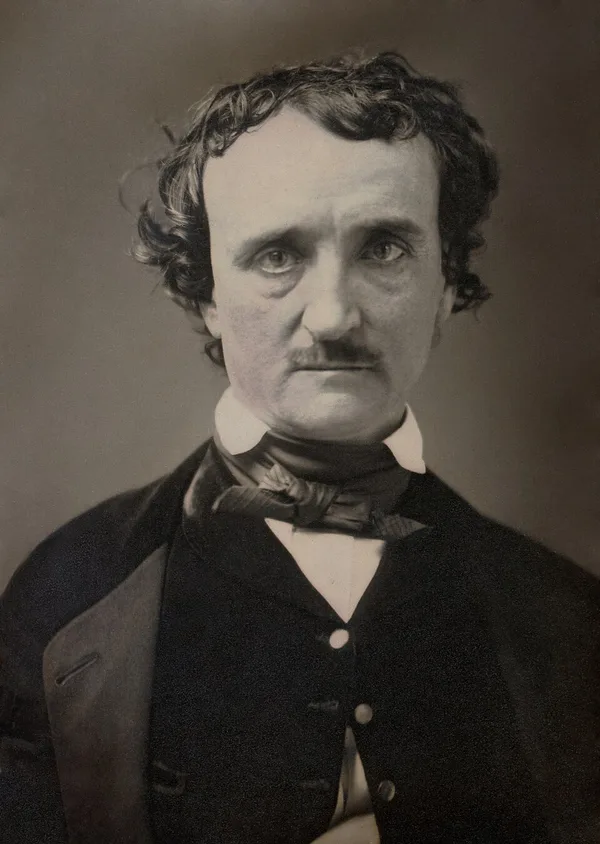
The title “Serenade” immediately signals a musical or lyrical intent, aligning with Poe’s fascination for the intertwining of art and emotion. Though the poem is attributed to Edgar Allan Poe, a careful examination reveals stylistic features that diverge from his canonical works—an observation worth noting in any literary analysis.
**Form & Structure**
The poem presents an irregular stanzaic pattern: a mix of quatrains, tercets, and free verse. There is no consistent meter or rhyme scheme; the poet favors enjambment to carry phrases across line breaks. This fluidity mirrors the “serenade” theme—music that flows naturally rather than adhering to strict form.
**Imagery & Symbolism**
- Celestial Motifs: The recurring references to stars, the “Seven Pleiades,” and celestial bodies create a dreamlike atmosphere. The image of “Elysium” evokes an idyllic afterlife, suggesting the narrator’s yearning for transcendence.
- Nature as a Mirror: Phrases such as “When Nature sleeps” and “The wearied light is dying down” imply that the natural world reflects the narrator’s internal state—stillness, melancholy, and longing.
- Musical Allusions: The mention of a lute, “music of a dream,” and the overall serenade theme underscore the poem’s sonic dimension. The narrator frames his words as melodic offerings to a beloved.
**Thematic Concerns**
- Love & Longing: The poem is a direct address to “Adeline,” expressing devotion and the desire for shared dreams. The speaker’s words are positioned as soothing lullabies, intended to comfort a lover.
- Transience & Mortality: The imagery of dying light and the fleeting nature of celestial bodies suggest an awareness of impermanence. This is a recurring Poe motif, yet here it is softened by the romantic context.
- Divine Intercession: The invocation of “O God above!” signals a plea for divine approval or guidance, blending the secular and spiritual realms.
**Language & Style**
The diction oscillates between archaic (e.g., “So sweet the hour”) and colloquial (“O list,- so soft and low”). This blend creates an ambiguous temporal setting—both timeless and contemporary. The poet’s use of enjambment allows the poem to read like a melodic chant, reinforcing the serenade motif.
**Critical Observations**
1. The poem’s lack of a rigid structure may reflect Poe’s experimentation with free verse, though it departs from his typical use of strict meter.
2. The celestial imagery, while evocative, could be interpreted as a romanticized escape rather than Poe’s usual dark fascination with death.
3. The final stanza’s plea for divine intervention introduces a subtle theological layer, uncommon in Poe’s more secular love poems.
**Conclusion**
“Serenade” is a lyrical meditation on love, longing, and the ethereal beauty of nature. Its musical form, celestial imagery, and emotional depth coalesce to create a tender yet contemplative piece. While it shares some thematic elements with Poe’s oeuvre—such as the interplay between mortality and beauty—it stands apart in its embrace of romantic idealism and sonic fluidity.
More poems by Edgar Allan Poe
People who read this also read
Picked for you from the reading habits of our literary commons.
Poem knowledge graph
A literary network built from the poet who wrote this poem and the words poems have in common.
Click a node to explore it; use the mouse wheel to zoom.