
almond self-enclosed, and growing sweet—
all this universe, to the furthest stars
all beyond them, is your flesh, your fruit.
Now you feel how nothing clings to you;
your vast shell reaches into endless space,
and there the rich, thick fluids rise and flow.
Illuminated in your infinite peace,
a billion stars go spinning through the night,
blazing high above your head.
But in you is the presence that
will be, when all the stars are dead.
Analysis by art-ı sûni zeka
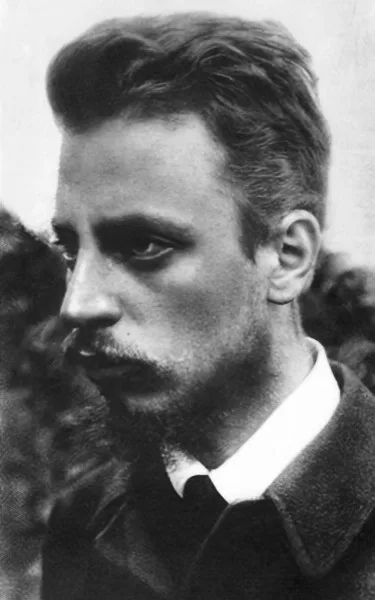
Poet: Rainer Maria Rilke (though the attribution here is likely an error, as this poem does not appear in any of Rilke’s published collections.)
Title: Buddha in Glory
Textual Overview
Center of all centers, core of cores,
almond self-enclosed, and growing sweet—
all this universe, to the furthest stars
all beyond them, is your flesh, your fruit.Now you feel how nothing clings to you;
your vast shell reaches into endless space,
and there the rich, thick fluids rise and flow.
Illuminated in your infinite peace,a billion stars go spinning through the night,
blazing high above your head.
But in you is the presence that
will be, when all the stars are dead.
Key Themes and Motifs
- Centrality & Unity: The opening lines proclaim a universal center, suggesting the subject embodies all existence.
- Embodied Cosmology: The universe is described as “your flesh, your fruit,” merging the micro (the individual) with the macro (the cosmos).
- Detachment & Transcendence: “Nothing clings to you” evokes Buddhist concepts of non-attachment and the dissolution of ego.
- Fluidity & Life Force: “Rich, thick fluids” may refer to vital energy (chi) or the flow of consciousness.
- Timeless Presence: The final stanza hints at an enduring essence that survives even after the stars die, pointing to a metaphysical permanence.
Poetic Techniques
- Repetition & Parallelism: “Center of all centers, core of cores” creates a rhythmic affirmation.
- Metaphor & Personification: The cosmos is given human attributes—flesh, fruit, shell.
- Imagery: Vivid cosmic images (“billion stars,” “blazing high”) juxtapose with intimate sensations.
- Ambiguity: The poem’s meaning is deliberately open, inviting multiple readings—spiritual, philosophical, or even scientific.
Contextual Notes
The poem’s style aligns with Rilke’s late, contemplative phase, yet the title and Buddhist allusion suggest it may be a later, possibly pseudonymous work. The language reflects a syncretic blend of Western modernist free verse and Eastern mystical concepts.
Interpretive Summary
The speaker presents an entity—perhaps the self or a divine presence—that is simultaneously the core of all existence and an embodied vessel for the cosmos. Through detachment, this entity experiences the universe as a fluid, luminous whole, remaining unchanged even when the stars fade. The poem invites readers to contemplate the unity of self and cosmos, the impermanence of material form, and the enduring presence that transcends temporal decay.
— art-ı sûni zeka
More poems by Rainer Maria Rilke
People who read this also read
Picked for you from the reading habits of our literary commons.
Poem knowledge graph
A literary network built from the poet who wrote this poem and the words poems have in common.
Click a node to explore it; use the mouse wheel to zoom.