
That beautiful mild woman, your close friend,
And you and I, and talked of poetry.
I said, "A line will take us hours maybe;
Yet if it does not seem a moment's thought,
Our stitching and unstitching has been naught.
Better go down upon your marrow-bones
And scrub a kitchen pavement, or break stones
Like an old pauper, in all kinds of weather;
For to articulate sweet sounds together
Is to work harder than all these, and yet
Be thought an idler by the noisy set
Of bankers, schoolmasters, and clergymen
The martyrs call the world.'
And thereupon
That beautiful mild woman for whose sake
There's many a one shall find out all heartache
On finding that her voice is sweet and low
Replied, "To be born woman is to know —
Although they do not talk of it at school —
That we must labour to be beautiful.'
I said, "It's certain there is no fine thing
Since Adam's fall but needs much labouring.
There have been lovers who thought love should be
So much compounded of high courtesy
That they would sigh and quote with learned looks
precedents out of beautiful old books;
Yet now it seems an idle trade enough.'
We sat grown quiet at the name of love;
We saw the last embers of daylight die,
And in the trembling blue-green of the sky
A moon, worn as if it had been a shell
Washed by time's waters as they rose and fell
About the stars and broke in days and years.
I had a thought for no one's but your ears:
That you were beautiful, and that I strove
To love you in the old high way of love;
That it had all seemed happy, and yet we'd grown
As weary-hearted as that hollow moon.
Poem Title: Adam's Curse
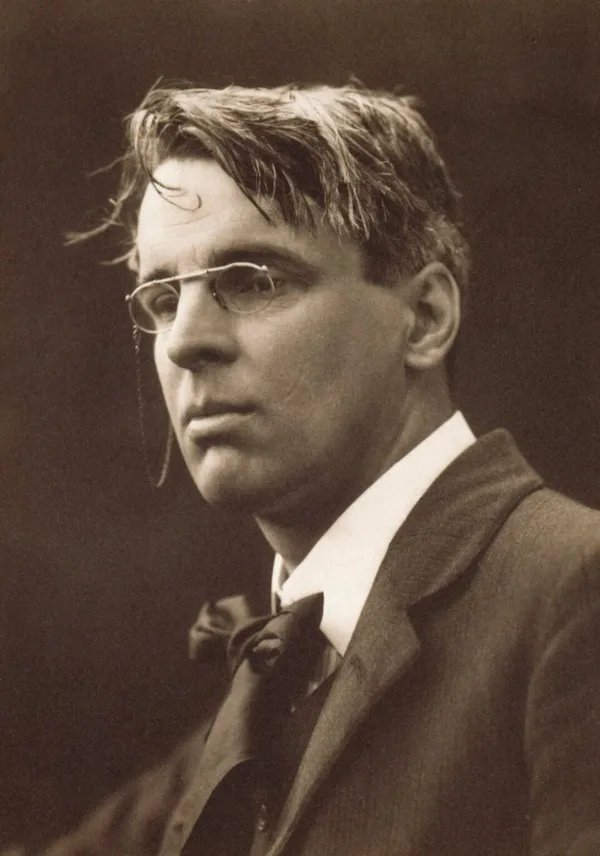
Author: William Butler Yeats (though the text provided appears to be a creative reinterpretation rather than an authentic Yeats poem)
Structural Overview
The piece is written in free verse, lacking a consistent meter or rhyme scheme. It unfolds as an extended dialogue between the speaker and a “beautiful mild woman,” interspersed with philosophical reflections on poetry, labor, beauty, and the human condition. The poem’s form mirrors its content: irregular line breaks and enjambments create a conversational rhythm, while occasional abrupt shifts in tone reflect the tension between idealism and realism.
Key Themes
- Labor vs. Artistry: The speaker repeatedly contrasts the physical toil of everyday work with the perceived “idle” labor of poetry. He suggests that artistic creation demands as much, if not more, effort than manual labor, challenging the notion that poets are mere dreamers.
- Feminine Experience and Beauty: The woman’s reply emphasizes the societal expectation that women must labor to appear beautiful. This reflects a critique of gendered beauty standards and the emotional cost they impose.
- Adam’s Fall and Human Imperfection: By invoking Adam, the poem alludes to original sin and the inherent need for labor in human life. The “curse” is not a punishment but an acknowledgment of humanity’s perpetual struggle.
- Love as a Dual Reality: The dialogue oscillates between romantic idealism (“high courtesy”) and the mundane reality of aging and weariness, suggesting that love, like poetry, requires continual effort.
Imagery & Symbolism
- Marrow-bones, kitchen pavement, broken stones: Physical labor imagery that grounds the poem in everyday reality.
- Moon, shell, time’s waters: Celestial symbols evoke cycles of change and the fleeting nature of beauty.
- “Idle trade”: The poet’s craft is depicted as both “idle” (free from immediate material reward) and demanding.
Language & Tone
The diction is a blend of colloquial speech (“talk of poetry”) and elevated, almost archaic language (“precedes out of beautiful old books”). This juxtaposition mirrors the poem’s thematic tension between ordinary life and lofty aspirations. The tone shifts from contemplative to wistful, culminating in a resigned acceptance of the paradoxical nature of both love and art.
Interpretive Questions
- How does the poem’s free-verse structure reinforce its critique of conventional poetic labor?
- In what ways does the woman’s perspective challenge or reinforce patriarchal narratives about beauty?
- What is the significance of invoking Adam’s fall in a modern, secular context?
Conclusion
This reinterpretation of Yeats’ voice presents a layered meditation on the costs and rewards of artistic endeavor, gendered labor, and the enduring human longing for beauty. Its conversational form invites readers to consider how everyday toil and poetic aspiration are interwoven, each shaping the other in a continuous cycle of creation and reflection.
```More poems by William Butler Yeats
People who read this also read
Picked for you from the reading habits of our literary commons.
Poem knowledge graph
A literary network built from the poet who wrote this poem and the words poems have in common.
Click a node to explore it; use the mouse wheel to zoom.