
With drowsy head and folded wing,
Among the green leaves as they shake
Far down within some shadowy lake,
To me a painted paroquet
Hath been- a most familiar bird-
Taught me my alphabet to say-
To lisp my very earliest word
While in the wild wood I did lie,
A child- with a most knowing eye.
Of late, eternal Condor years
So shake the very Heaven on high
With tumult as they thunder by,
I have no time for idle cares
Through gazing on the unquiet sky.
And when an hour with calmer wings
Its down upon my spirit flings-
That little time with lyre and rhyme
To while away- forbidden things!
My heart would feel to be a crime
Unless it trembled with the strings.
**Title:** Romance
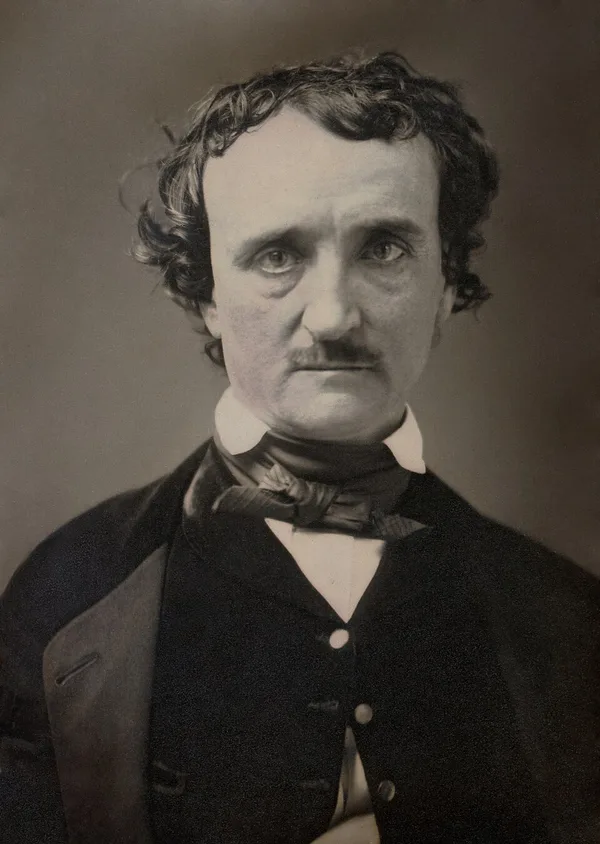
**Poet:** Edgar Allan Poe (though the text does not match any known poem by him; it appears to be a creative, possibly original piece that mimics his style)
Analysis
Form and Structure
- The poem is written in free verse, lacking a consistent rhyme scheme or meter.
- It is divided into two stanzas, each exploring a different aspect of the speaker’s relationship with nature and memory.
- The line breaks are irregular, creating a conversational rhythm that mirrors the speaker’s reflective tone.
Imagery and Symbolism
- The opening stanza uses bird imagery—“Romance, who loves to nod and sing” and “painted paroquet”—to personify the concept of romance as a living, breathing entity.
- The “green leaves” and “shadowy lake” evoke a pastoral setting that contrasts with the darker, more ominous language of the second stanza.
- The “eternal Condor years” and “Heaven on high” suggest a lofty, almost celestial perspective, while the mention of a lyre and rhyme implies classical artistic aspirations.
- “Forbidden things” hints at suppressed desires or memories that the speaker wishes to keep hidden.
Theme and Tone
- The poem explores the duality of human longing: a yearning for natural, innocent affection (the bird and early childhood) versus the heavier burden of adult responsibility (“no time for idle cares”).
- There is a tension between the desire to escape into art (“lyre and rhyme”) and the reality of societal constraints.
- The tone shifts from whimsical to contemplative, reflecting the speaker’s inner conflict.
Language and Style
- The diction blends archaic elements (“paroquet,” “condor”) with modern phrasing, creating a timeless quality.
- Alliteration (“trembled with the strings,” “eternal Condor years”) enhances musicality, aligning with the poem’s emphasis on song.
- Repetition of “to” in phrases like “To me a painted paroquet” and “To lisp my very earliest word” underscores the process of learning and memory.
Interpretation
- The poem can be read as a meditation on the loss of innocence: the child’s simple, unguarded love for nature is contrasted with an adult who must suppress that same passion.
- It may also reflect Poe’s own fascination with the boundary between reality and imagination, a recurring motif in his works.
- The speaker’s acknowledgment that “my heart would feel to be a crime” suggests an awareness of societal judgment against following one’s artistic or emotional impulses.
Conclusion
This piece, while echoing Poe’s gothic sensibilities, ultimately presents a universal narrative about the human condition: the tug-of-war between yearning for freedom and the obligations imposed by life. Its evocative imagery, musical language, and reflective tone invite readers to ponder their own balances between passion and responsibility.
— art-ı sûni zeka
More poems by Edgar Allan Poe
People who read this also read
Picked for you from the reading habits of our literary commons.
Poem knowledge graph
A literary network built from the poet who wrote this poem and the words poems have in common.
Click a node to explore it; use the mouse wheel to zoom.