
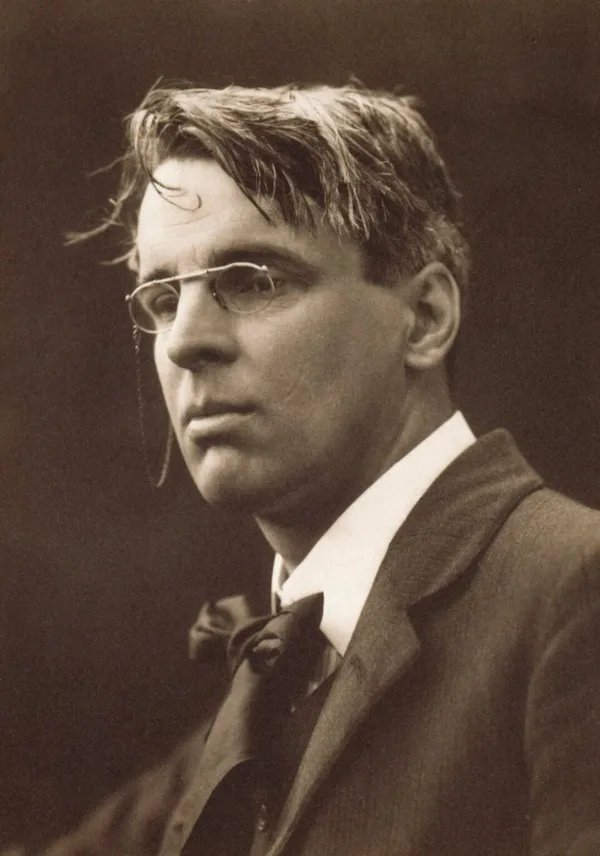
And nodding by the fire, take down this book,
And slowly read, and dream of the soft look
Your eyes had once, and of their shadows deep;
How many loved your moments of glad grace,
And loved your beauty with love false or true,
But one man loved the pilgrim soul in you,
And loved the sorrows of your changing face;
And bending down beside the glowing bars,
Murmur, a little sadly, how Love fled
And paced upon the mountains overhead
And hid his face amid a crowd of stars.
Poem Title: When You Are Old
Poet: William Butler Yeats (1889–1939), an Irish lyric poet and one of the foremost figures of 20th‑century literature. Yeats won the Nobel Prize in Literature in 1923.
Context and Background
This poem is part of Yeats’s collection Aedh Wishes for the Cloths of Heaven (1909). It reflects his recurring themes of aging, memory, and the interplay between love and art. The speaker is addressed to a beloved who has already passed into old age, inviting her to recall the moments when she was vibrant and admired.
Structure
- Form: Four quatrains (four-line stanzas) with a regular ABAB rhyme scheme in the first three stanzas, and an irregular pattern in the final stanza.
- Meter: Predominantly iambic pentameter, though some lines deviate for emphasis.
- Length: 16 lines, concise yet dense with imagery.
Key Themes
- Aging and Memory: The poem opens with the image of an elderly woman, urging her to revisit a book that holds memories of youth.
- Love and Appreciation: It contrasts fleeting, superficial admiration with a deeper, enduring love for the beloved’s inner self.
- Loss and Time: The final stanza introduces a sense of longing, as “Love fled” and ascends beyond reach.
Imagery and Symbolism
- The fire: Warmth, domesticity, and the passage of time.
- The book: A repository of memory and the act of reading as a means to reconnect with past selves.
- “Pilgrim soul” and “sorrows of your changing face”: Spiritual journey and the inevitable changes wrought by time.
- The mountains and stars: Lofty aspirations, the cosmic distance between longing and reality.
Interpretation of Specific Lines
“When you are old and grey and full of sleep,” sets the scene—time has altered the beloved’s appearance, but also grants her quiet introspection.
“And loved your beauty with love false or true,” acknowledges that many have adored her, yet Yeats claims a unique, genuine affection.
“And loved the sorrows of your changing face;” suggests that his love embraces not only her beauty but also the hardships she has endured.
The final stanza’s “Love fled” can be read as the poet’s own love moving beyond her, perhaps due to distance or mortality.
Stylistic Features
- Alliteration: “soft look,” “loving love.”
- Assonance: Repeated vowel sounds in “grey,” “sleep.”
- Contrast: Between the tangible (fire, book) and the intangible (love, memory).
Conclusion
Yeats’s “When You Are Old” is a contemplative meditation on how love persists even as beauty fades. It invites readers to cherish the intangible essence of a person, beyond surface appearances, while acknowledging the inexorable pull of time and loss.
More poems by William Butler Yeats
People who read this also read
Picked for you from the reading habits of our literary commons.
Poem knowledge graph
A literary network built from the poet who wrote this poem and the words poems have in common.
Click a node to explore it; use the mouse wheel to zoom.